
Electric Kettle Inverter Size: 1500W vs 2000W in an RV
Date:2026-10-24 Click:9 Source:Rogerele
Quick answer: A typical 120V RV electric kettle draws about 1,000 to 1,500W continuous. A 1500W pure sine wave inverter often runs kettles at or under about 1,200 to 1,400W if you keep other big loads off. Larger 1,500W kettles, units with a high start surge, or any kettle run with another AC load at the same time need a 2000W inverter. Prefer the Rogerele REP1500 for lighter kettles and the REP2000 when you want full-size kettle headroom.
The problem shows up at the first boil of the trip: you plug in the kettle, the inverter LCD jumps near its limit, then the unit beeps and shuts down, or the battery voltage drops to the low-voltage alarm. An electric kettle looks small, but it is a hard continuous load that can sit near 1,500W for several minutes. This guide works out the watts, 12V current and battery size for morning coffee or tea, and compares the REP1500-121 and the REP2000-121.
How many watts does an RV electric kettle use?
Most 120V travel and camping kettles are rated 600 to 1,500W. Compact dual-voltage travel kettles often sit around 600 to 1,000W; full-size RV or home-style kettles commonly list 1,200 to 1,500W. A kettle is mostly a heating element, so start-up surge is usually small and the continuous watts on the label are what you must size for. The 12V current column assumes about 90% inverter efficiency, so 12V amps are roughly watts divided by 10.8. Always check your own rating plate.
| Load (120V) | Typical watts | 12V DC current (approx.) | 1500W | 2000W |
|---|---|---|---|---|
| Travel / dual-voltage kettle | 600 to 1,000W | 56 to 93A | Yes | Yes |
| Compact RV kettle | 1,000 to 1,200W | 93 to 111A | Yes | Yes |
| Full-size kettle, mid rating | 1,200 to 1,400W | 111 to 130A | Yes, alone | Yes |
| Full-size kettle, high rating | 1,450 to 1,500W | 134 to 139A | At the limit | Yes |
| Kettle plus coffee maker | about 2,200 to 2,500W | about 204 to 231A | No | No, one at a time |
| Kettle plus RV fridge on AC | about 1,500 to 1,900W | about 139 to 176A | No | Tight to Yes |
For a load that runs for several minutes, plan to use no more than about 80% of an inverter's continuous rating: about 1,200W on a 1500W inverter and about 1,600W on a 2000W inverter. A labeled 1,500W kettle is a poor daily match for a 1500W inverter because there is no margin for cable loss or battery sag.
Why an electric kettle needs a pure sine wave inverter
A heating element will warm water on almost any waveform, but many modern kettles add a thermostat, boil-dry cutout and indicator electronics designed for grid-like sine wave power. On a pure sine inverter with less than 3% THD on a linear load, as listed for both REP models below, the kettle sees power very close to a wall outlet. Prefer pure sine for RV kettles.
When 1500W is enough
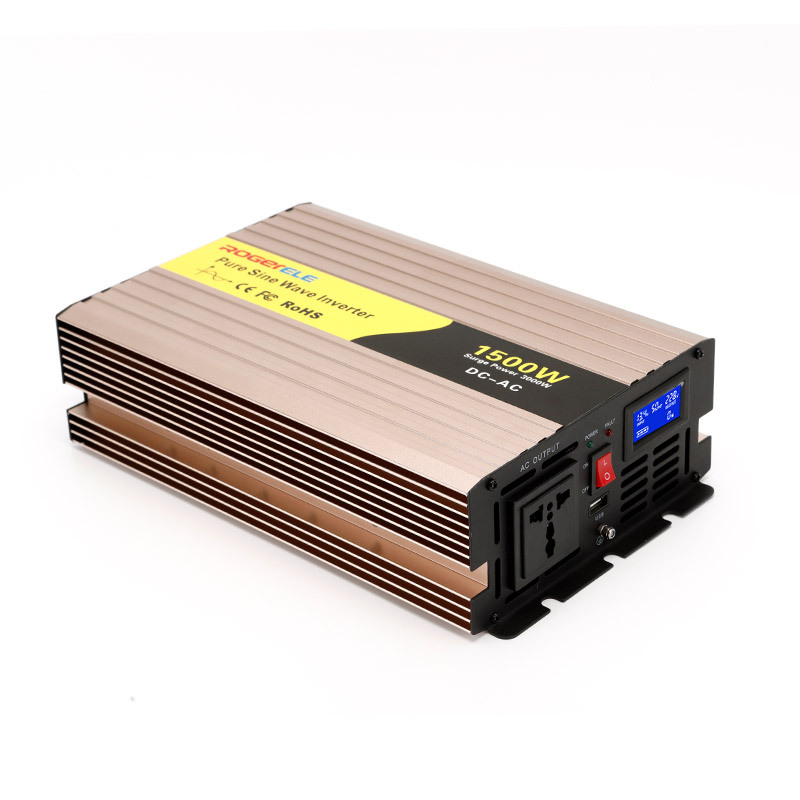 If your kettle is rated about 1,000 to 1,200W, or you keep a mid-size kettle alone with other big loads off, the REP1500 pure sine wave inverter is a practical RV fit. It is rated 1500W continuous with a 3000W peak and less than 3% THD on a linear load. The 12V model (REP1500-121) lists no-load current under 0.8A, about 10W, maximum efficiency of 90%, and measures 310 × 180 × 80 mm at 2.9 kg. Keep the microwave, hair dryer and induction burner off while the kettle runs.
Tip: choose a lower-watt kettle first
A 1,000 to 1,200W travel kettle is often cheaper than upsizing the inverter and battery bank. Boil times are a few minutes longer, but 12V current drops from about 139A to about 93 to 111A.
When to choose 2000W
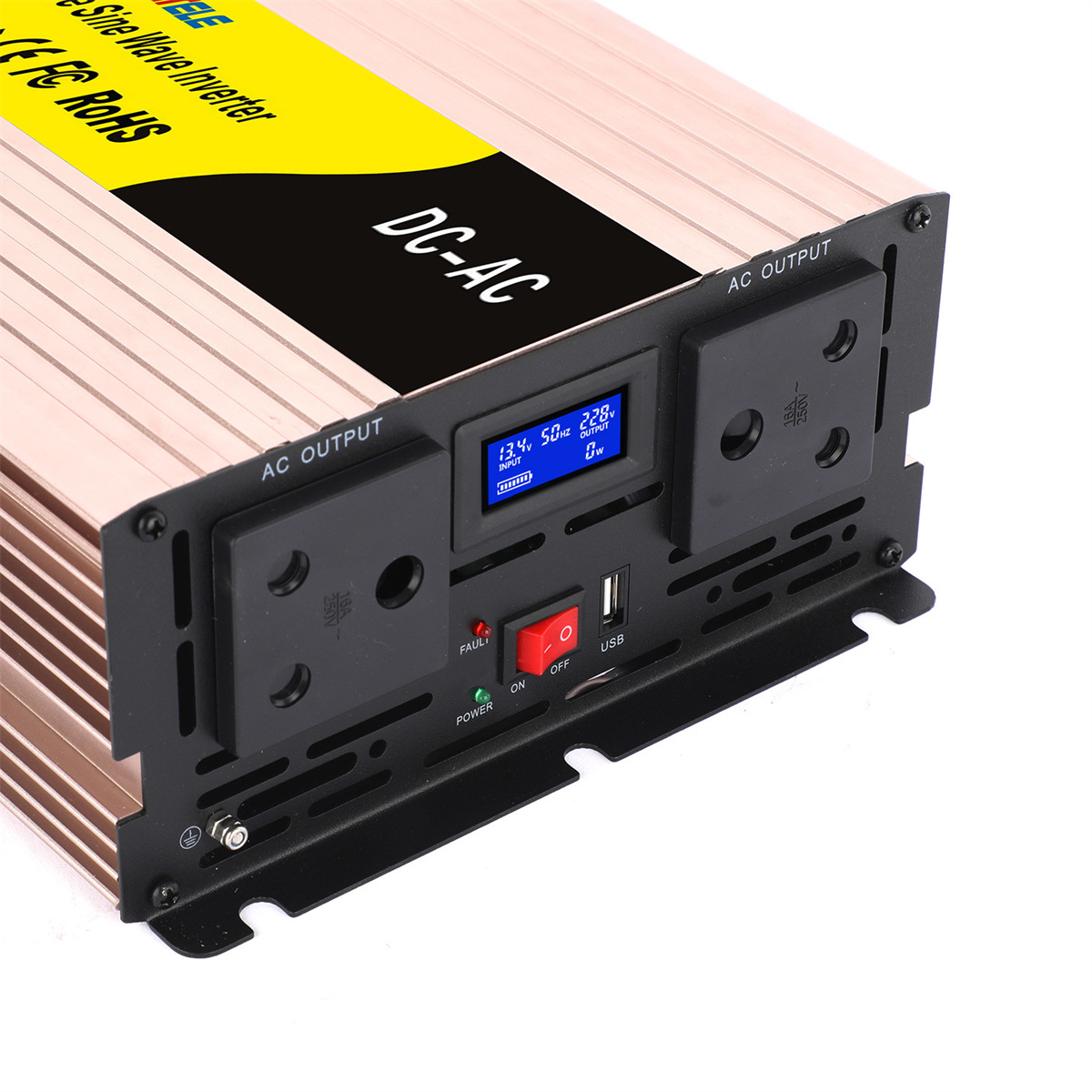 Choose the REP2000 pure sine wave inverter if anyone uses a full-size 1,450 to 1,500W kettle, if you sometimes boil while the fridge is on AC, or if you want headroom for a coffee maker or microwave later, one load at a time. It is rated 2000W continuous with a 4000W peak, with up to 90% efficiency on the 12V model (REP2000-121) and no-load current under 0.9A. It measures 355 × 205 × 95 mm and weighs 3.9 kg; the 12V and 24V versions add a QC3.0 USB port.
24V and 48V make high kettle loads easier
At 24V a 1,500W kettle draws about 69A instead of about 139A, and at 48V about 35A. For a new RV build, the REP2000-241 (24V) or REP2000-481 (48V, up to 95% efficiency) means thinner cables and less voltage drop.
REP1500-121 vs REP2000-121 specifications
| Specification | REP1500-121 | REP2000-121 |
|---|---|---|
| Rated / peak output | 1500W / 3000W | 2000W / 4000W |
| Waveform / THD | Pure sine, <3% linear load | Pure sine, <3% linear load |
| DC input / operating range | 12V / 10 to 15.5V | 12V / 10 to 15.5V |
| AC output (US version) | 100 / 110 / 120V ±5%, 60Hz available | 100 / 110 / 120V ±5%, 60Hz available |
| Max efficiency (12V) | 90% | 90% |
| No-load current | <0.8A | <0.9A |
| Low-voltage alarm / cutoff | 10.5V / 10V | 10.5V / 10V |
| Approx. battery current at full load | about 139A | about 185A |
| USB | QC3.0 | QC3.0 |
| Size / net weight | 310 × 180 × 80 mm / 2.9 kg | 355 × 205 × 95 mm / 3.9 kg |
| Best kettle match | 600 to ~1,200W kettle alone | Up to ~1,500W kettle |
| Listed warranty | 2 years | 2 years |
How much battery does boiling water need?
Energy use is moderate because boil time is short, but the current is high. A 1,200W kettle for 6 minutes uses about 120Wh at the outlet, or about 133Wh from the battery after inverter losses, roughly 10Ah from a 12.8V LiFePO4 battery.
- Capacity: a 12V 100Ah LiFePO4 battery (about 1,280Wh) covers many morning boils plus lights and a 12V fridge.
- BMS current: a 100A continuous BMS supports only about 1,100W of inverter load. For a 1,200 to 1,500W kettle at 12V you need about 120 to 150A continuous from the bank, and about 200A for full 2000W headroom.
- Lead-acid: at 130A or more, AGM and flooded batteries sag fast and can trip the 10.5V alarm early.
- Charging: the REP series is an inverter only, so plan solar, alternator or shore charging each day.
High-watt bathroom loads raise the same sizing questions; see our guide on hair dryer inverter size: 1500W vs 2000W in an RV.
Wiring tips for kettle loads
- Connect the inverter directly to the battery bank with short, heavy cables and a fuse on the positive cable close to the battery, sized for full-load current (about 139A for 1500W or 185A for 2000W at 12V) following the inverter manual. Never use a 12V lighter socket.
- Keep the battery-to-inverter run under about 1.5 meters and plug the kettle into the inverter outlet or a short heavy-duty 15A cord.
- Run the kettle alone: switch off the microwave, coffee maker, induction burner and hair dryer while boiling.
FAQ
Can a 1000W inverter run an electric kettle?
Only a small travel kettle under about 800W. For a typical 1,000 to 1,500W RV kettle, start at 1500W; choose 2000W for full-size 1,500W units.
Does an electric kettle need a pure sine wave inverter?
The heating element itself does not care about waveform, but the thermostat, boil-dry protection and any digital controls are designed for grid-like power. Pure sine is the safer choice.
Why does my inverter beep when I turn the kettle on?
Usually the battery voltage is sagging to about 10.5V under 110A or more, or the kettle watts are over the continuous rating. Check cables, connections and the BMS rating.
Can I run a kettle and a coffee maker together?
Together they often exceed 2,000W. Boil first, then brew. A 2000W inverter is sized for one of those loads at a time.
Conclusion
For a typical 120V RV electric kettle around 1,000 to 1,400W, a 1500W pure sine inverter is often enough when the kettle runs alone. For a labeled 1,500W kettle, or when you want headroom for a coffee maker or microwave later, choose a 2000W pure sine inverter. Plan for about 100 to 140A at 12V during a boil, a LiFePO4 bank whose BMS can deliver it, and short fused cables, or move to 24V or 48V for a new build. Compare the full specifications of the REP1500 pure sine wave inverter and the REP2000 pure sine wave inverter, and for quotes, OEM options or custom DC input voltages, contact us: email Long@rogerele.com, Tel +86-577-62769701, WhatsApp +86-13587757588.
