
What Size Inverter Do I Need to Run an RV Air Conditioner?
Date:2026-10-09 Click:22 Source:Rogerele
Quick answer: Most 13,500 BTU RV rooftop air conditioners use roughly 1,200W to 1,800W while running and can pull two to three times that for a moment when the compressor starts. A 3000W pure sine wave inverter is the practical minimum for one 13,500 BTU unit, ideally with a soft-start kit fitted to the air conditioner. For a 15,000 BTU unit, two air conditioners, or AC plus a microwave at the same time, plan on a 5000W inverter and a 24V or 48V battery bank. The battery, not the inverter, is usually the real limit.
Running the roof air on battery power is one of the most common goals for RV owners, van builders and food truck operators who want quiet, generator-free cooling. This guide shows how to size the inverter, what the battery must deliver, and why the system voltage matters so much.
How many watts does an RV air conditioner use?
The exact figure is on the air conditioner's nameplate, usually as running amps at 120V. Multiply amps by 120 to get approximate watts. Typical planning ranges look like this:
| Air conditioner | Typical running power | Brief starting surge (no soft start) | Suggested inverter size |
|---|---|---|---|
| Small window or mini RV unit (5,000 to 8,000 BTU) | about 450W to 800W | about 1,500W to 2,500W | 2000W |
| 13,500 BTU rooftop | about 1,200W to 1,800W | about 3,000W to 5,000W | 3000W with soft start |
| 15,000 BTU rooftop | about 1,500W to 2,000W | about 4,000W to 6,000W | 5000W, or 3000W with soft start and no other big loads |
| Two rooftop units, or AC plus microwave | about 3,000W to 3,800W | depends on start timing | 5000W or larger |
These are planning numbers only. Heat, high voltage drops, a dirty coil or an older compressor can raise both the running and starting load, so always check your own unit.
Why does the compressor start matter so much?
An air conditioner compressor needs a burst of current to get its motor turning against refrigerant pressure. If the inverter cannot supply that burst, it will trip on overload or the compressor will hum and fail to start. That is why inverter size for an AC unit is decided by the starting surge, not the running watts.
Peak rating versus real starting ability
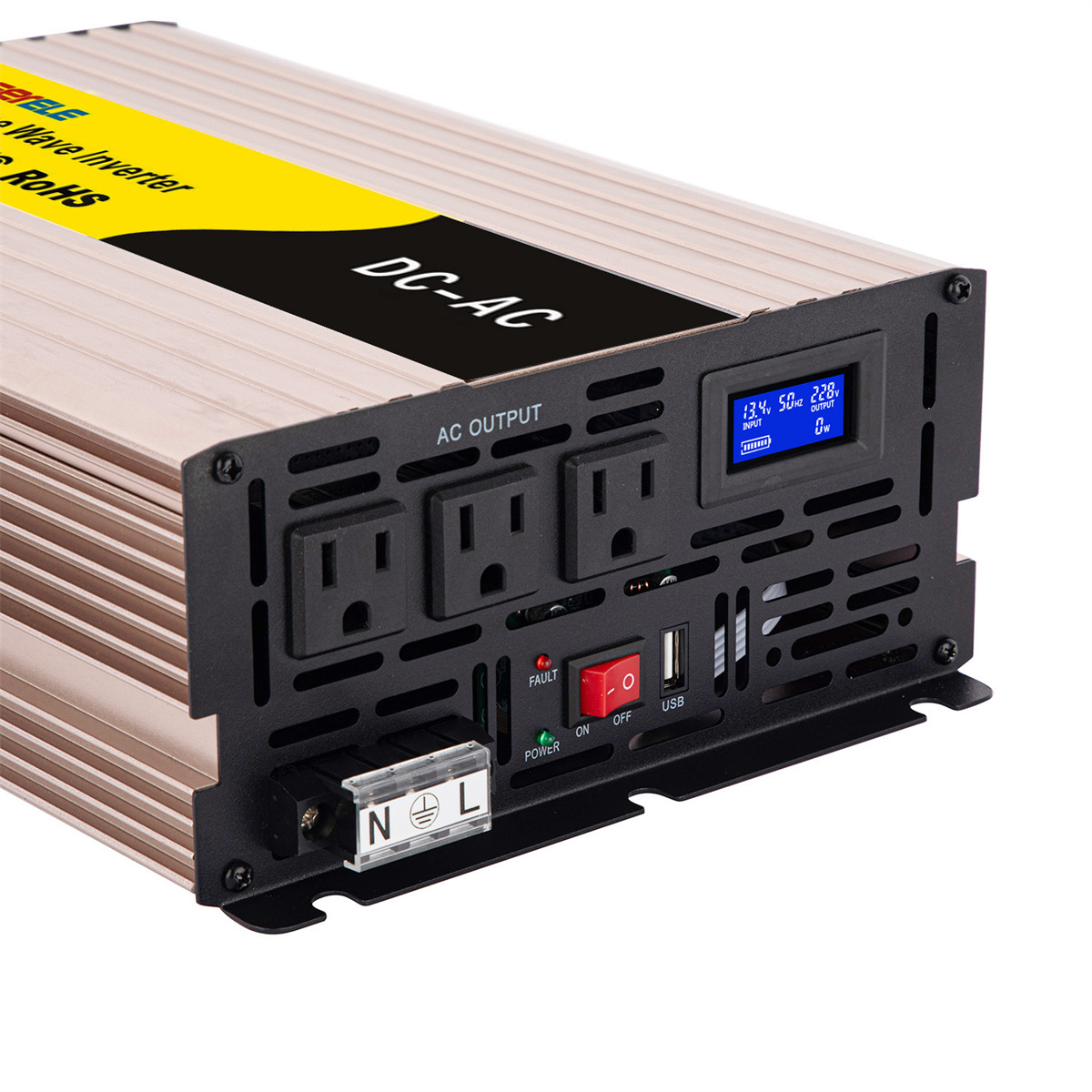
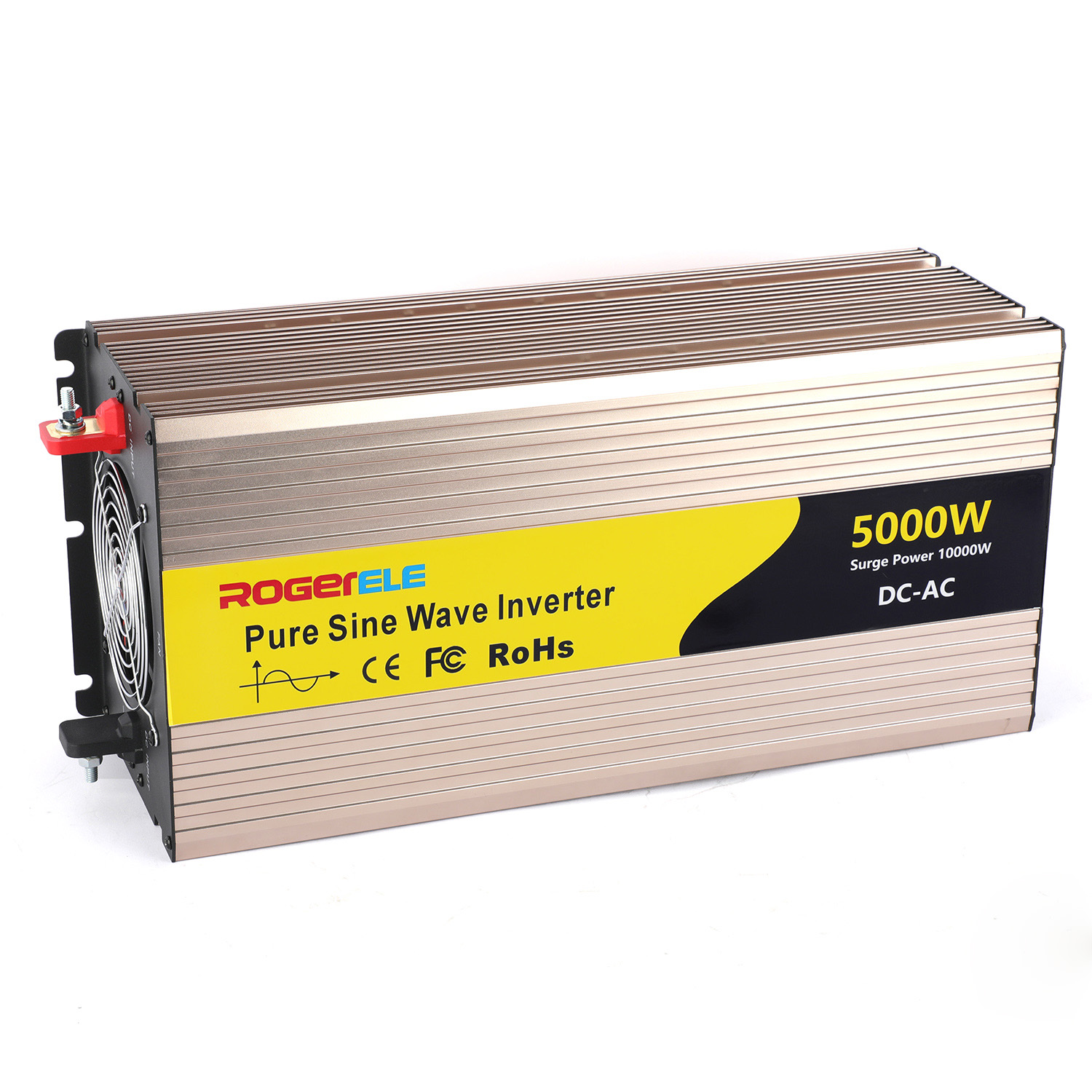
Our REP3000 3000W pure sine wave inverter lists 6000W peak output, and the REP5000 lists 10000W peak. The peak duration is not specified, so do not count on the peak figure alone to start a large compressor. Treat the rated continuous output as your working number and keep a margin.
What a soft-start kit does
An aftermarket soft starter installed in the air conditioner ramps the compressor up more gently, which cuts the inrush current sharply. It is the single most useful upgrade if you want a 3000W inverter to run a 13,500 BTU unit reliably. Follow the air conditioner maker's guidance and use a qualified installer.
How much battery do I need to run an RV air conditioner?
This is where most systems fall short. Use the same simple formula as for any inverter load:
DC amps = AC watts ÷ battery voltage ÷ inverter efficiency
The REP3000 lists maximum efficiency of 90% at 12V, 92% at 24V and 95% at 48V. For a 13,500 BTU unit averaging about 1,500W, that gives:
| Battery system | DC current at about 1,500W | Battery energy per hour of cooling | Practical note |
|---|---|---|---|
| 12V | about 139A | about 139Ah (about 1.7kWh) | Very heavy cables; short runtimes |
| 24V | about 68A | about 68Ah (about 1.6kWh) | Good balance for RVs and trucks |
| 48V | about 33A | about 33Ah (about 1.6kWh) | Best for 5000W systems and long runtimes |
The compressor cycles on and off, so real use is often lower than the full figure, but plan on about 1kWh to 1.7kWh of battery for every hour of cooling in hot weather. A 12V 100Ah LiFePO4 battery stores about 1.28kWh, so one battery gives roughly an hour. Running the AC overnight usually needs several kWh of lithium storage plus solar, alternator or shore charging during the day. Our guides on how long a battery will run an inverter and LiFePO4 vs lead-acid batteries go deeper.
Should I choose 12V, 24V or 48V for RV air conditioning?
A 12V system can run a 13,500 BTU unit, but currents of 140A running and several hundred amps at start-up demand very short, very thick cables and a battery that can deliver high current. Voltage drop on the cables can trigger the inverter's low-voltage alarm (10.5V ±0.5V on the 12V REP models) during compressor starts.
A 24V or 48V bank halves or quarters that current. It also lowers idle draw: the REP3000 lists no-load current below 1A at 12V, below 0.7A at 24V and below 0.4A at 48V. If you are building a new RV or van system around air conditioning, 24V or 48V is usually the better choice. See how to wire batteries in series or parallel for building a higher-voltage bank.
Which Rogerele inverter fits RV air conditioning?
- REP2000 (2000W rated, 4000W listed peak): small window or mini units, fans and fridges. Not recommended for a standard 13,500 BTU rooftop unit.
- REP3000 (3000W rated, 6000W listed peak, 12V/24V/48V input, 100/110/120V or 220/230/240V output, 50Hz or 60Hz): one 13,500 BTU unit, ideally with a soft start.
- REP5000 (5000W rated, 10000W listed peak): 15,000 BTU units, AC plus other appliances, or larger motorhomes and food trucks.
Pure sine output matters here. Compressor motors and the AC control boards run cooler and quieter on a clean sine wave. Compare the full range on our REP pure sine wave inverter series page.
FAQ
Can a 2000W inverter run a 13,500 BTU RV air conditioner?
Usually not reliably. Even if the running load fits, the compressor's starting surge often trips a 2000W inverter. Use 3000W or more, preferably with a soft-start kit.
How long can I run my RV AC on batteries?
Plan on about 1kWh to 1.7kWh per hour of cooling for a 13,500 BTU unit. Divide your usable battery kWh by that figure for a rough runtime.
Can I run the RV air conditioner from the inverter while driving?
Only with a strong charging system. A stock 12V alternator cannot supply 140A of continuous inverter load on top of the vehicle's own needs. See can my alternator run an inverter while driving.
Do I need a pure sine wave inverter for an air conditioner?
Yes. Motor-driven appliances and electronic controls are designed for sine wave power, and a modified sine wave can cause extra heat, noise or failure to start.
Do I need 120V 60Hz or 230V 50Hz?
Match the air conditioner. North American RVs use 120V 60Hz, while many other markets use 220V to 240V at 50Hz. REP inverters are ordered in either AC family, with 50Hz or 60Hz output.
Rogerele makes 12V, 24V and 48V pure sine wave inverters for RVs, trucks, food trucks and equipment brands. For help matching an inverter to your air conditioner and battery bank, or for an OEM version, contact our team.
