
Pure Sine Wave vs Modified Sine Wave Inverter for Cars: Which Do You Need?
Date:2026-09-28 Click:32 Source:Rogerele
Quick answer: For cars, trucks and vans, a pure sine wave inverter is the safer default for laptops, phone chargers, CPAP machines, fridge compressors, induction cooktops and audio gear, because its AC output closely matches grid power (Rogerele REP units list THD under 3% on linear loads). A modified sine wave inverter costs less and is fine for simple resistive loads such as basic heaters, some lights and older tools, but it can make motors run hotter, cause buzzing in audio, or refuse to start sensitive electronics. If you are unsure what you will plug in, choose pure sine.
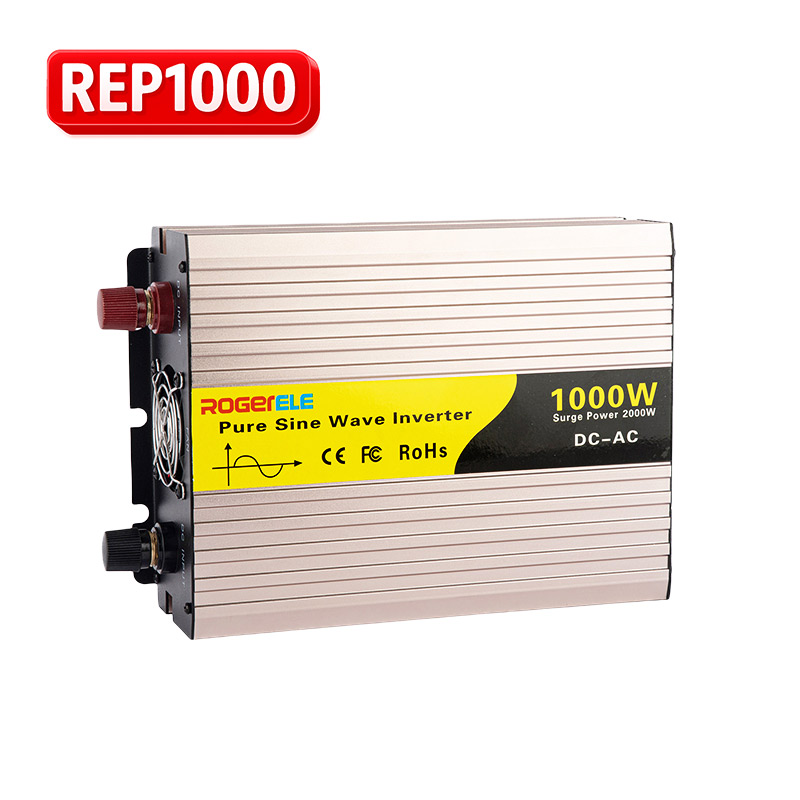
What is the difference between pure sine wave and modified sine wave?
Both inverter types turn DC battery power into AC wall-style power. The difference is the shape of that AC waveform:
- Pure sine wave follows a smooth curve like utility-grid electricity. On Rogerele REP pure sine wave inverters, the published output waveform is Pure Sine Wave with waveform distortion THD < 3% (linear load).
- Modified sine wave (also called modified square wave) steps between high and low voltage levels. It is simpler and cheaper to produce. Rogerele’s REM modified sine wave series covers roughly 150W–6000W for vehicles and boats.
Higher distortion on a modified waveform is why some devices run hotter, noisier or less efficiently. Pure sine keeps motors, switched-mode power supplies and medical loads happier.
Pure sine vs modified sine: side-by-side comparison
| Point | Pure sine wave | Modified sine wave |
|---|---|---|
| Waveform | Smooth sine, close to grid | Stepped / square-like |
| THD (Rogerele published) | THD < 3% (linear load) on REP series | Not listed as <3% on REM pages; expect higher distortion |
| Sensitive electronics | Best for laptops, CPAP, modern chargers | May buzz, overheat or fail to start |
| Motors / compressors | Cooler, quieter start for fridge / tools | Often hotter, weaker torque, more noise |
| Audio / displays | Cleaner; less hum | Buzz or flicker is common |
| Efficiency / heat | REP pages list max efficiency around 90–93% by model | REM pages list max efficiency around 90–92% by model; loads may waste more heat |
| Cost | Higher | Lower |
| Best car use | Mixed / unknown loads, camping, work vans | Simple resistive loads only |
When is a modified sine wave inverter OK in a car?
Modified sine is acceptable when every load is simple and resistive, for example:
- Incandescent or basic resistive heaters
- Some older corded tools without electronics
- Basic lights that do not use delicate drivers
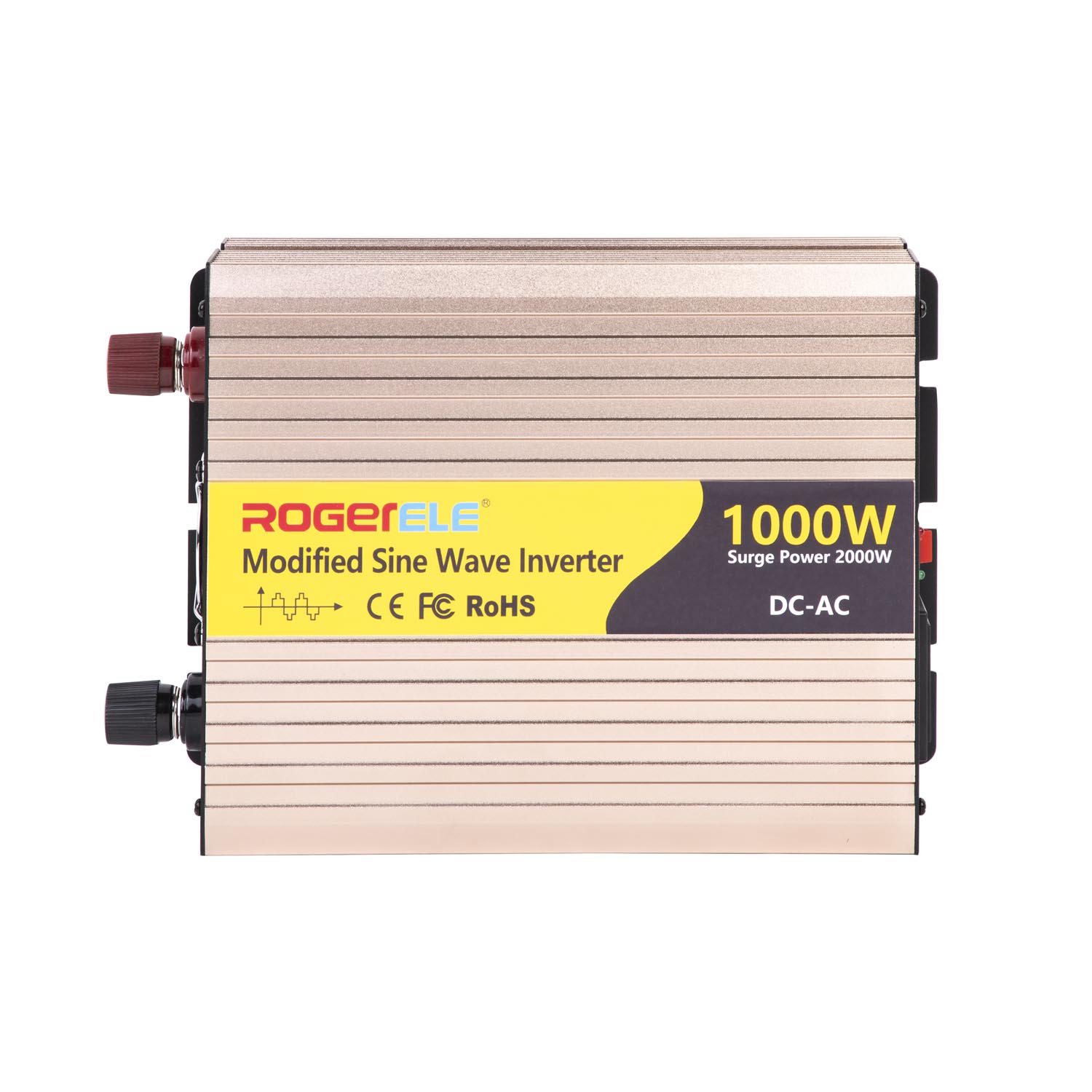
Rogerele’s REM line is described as a modified sine wave inverter series that converts 12V/24V/48V DC from vehicle or boat batteries into 110V/120V/220V AC, with sizes from about 150W to 6000W. See the 1000W modified sine wave inverter and 2000W modified sine wave inverter if your load list is truly simple and you want the lower-cost option.
If any device on your list has a motor, a digital display, a switching power supply or a medical label, do not rely on modified sine.
When do you need a pure sine wave car inverter?
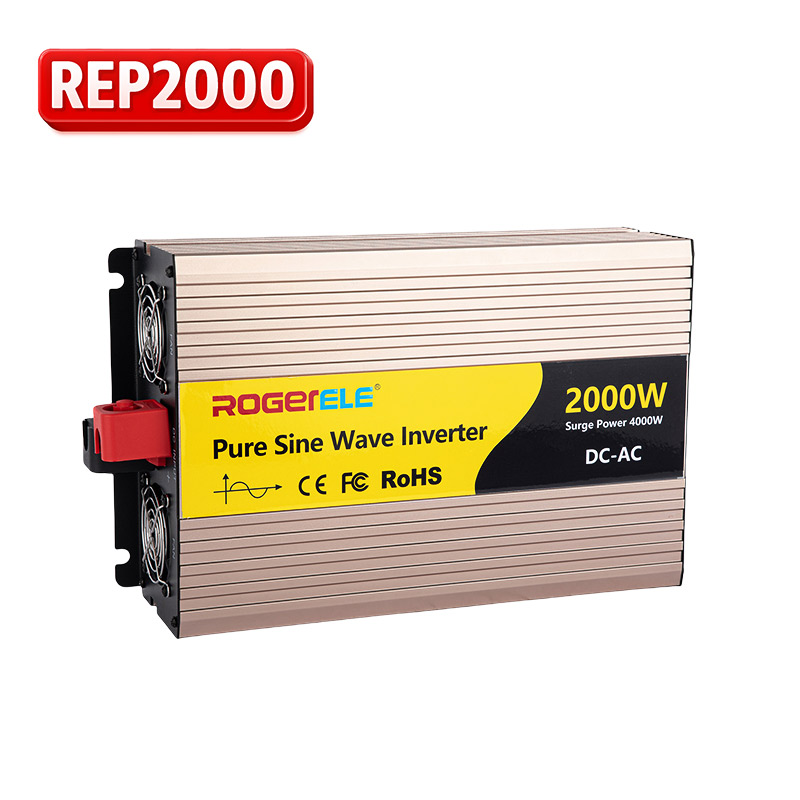
Choose pure sine when you run any of the following from the vehicle:
- Laptops, phones and camera chargers — modern adapters expect clean AC
- Medical devices such as CPAP — manufacturers usually require pure sine
- Induction cooktops and variable-speed tools — electronics and motors need a clean waveform
- Fridge and freezer compressors — better start torque and less heat
- Audio systems, TVs and LED drivers — less buzz and flicker
Rogerele’s REP series is a factory pure sine line for vehicles and boats. Published pages list 12V/24V/48V DC input options, multiple AC output voltages (including 100–120V and 220–240V ranges depending on model), 50Hz or 60Hz, Pure Sine Wave output and THD < 3% on linear loads. Browse:
- 300W pure sine wave inverter — light charging and small loads
- 1000W pure sine wave inverter — common car / SUV camping size
- 2000W pure sine wave inverter — microwave-class and multi-load vans
- 3000W pure sine wave inverter — higher-power trucks and work vans
- Full range: pure sine wave inverter category and REP series (about 300W–6000W)
How do you size a car inverter after choosing the waveform?
Waveform choice does not replace wattage sizing. Use the same formula for either type:
Inverter continuous watts ≥ (sum of simultaneous running watts) × 1.25
Then confirm the inverter’s peak rating covers the largest motor start surge. Also match DC system voltage: cigarette-lighter sockets are usually limited to low power (often under 150–180W). Hardwiring to the battery is required for 1000W and above. For a full 12V vs 24V current walkthrough, see Rogerele’s guide What Size Inverter Do I Need for My Car or Truck?.
Rough DC current at full load:
DC amps ≈ AC watts ÷ battery volts ÷ efficiency
Example: a 2000W load on 12V at about 90% efficiency draws roughly 2000 ÷ 12 ÷ 0.9 ≈ 185A. That needs heavy cable, a main fuse near the battery and usually a second battery or lithium bank—not the starter battery alone.
Which Rogerele option should car and truck buyers pick?
As a source factory in Wenzhou, Rogerele builds both waveforms so buyers can match cost to the real load list:
- Most car, SUV and van buyers: start with a REP pure sine wave inverter so one unit covers mixed electronics and camping loads.
- Budget projects with only resistive loads: consider the REM modified sine wave series.
- OEM / distributor / private-label: tell the factory your DC voltage, AC voltage and frequency, socket type and continuous/peak watts via the contact page.
FAQ
Is pure sine wave better than modified sine wave for cars?
Yes for most modern vehicle use. Pure sine is closer to grid power and is safer for electronics, compressors and medical devices. Modified sine is mainly a cost-saving choice for simple resistive loads.
Can I run a laptop or CPAP on a modified sine wave inverter?
It is risky. Many laptop bricks and CPAP units are specified for pure sine. A modified waveform can cause heat, noise, error codes or early failure. Use a pure sine model such as a Rogerele REP unit.
What THD does Rogerele list for pure sine inverters?
REP pure sine product pages list waveform distortion THD < 3% (linear load). Always confirm the figure on the exact model page you order.
Do Rogerele pure sine inverters work on 12V car batteries?
Yes. REP pages list 12V, 24V and 48V DC input options (and note that custom DC voltages are available). Match the inverter input to your battery system and size cables for the DC current.
What size pure sine inverter is common for car camping?
Many car and SUV campers use 300W–1000W for charging and small appliances, and 1500W–2000W when a microwave or several loads share power. Add up your simultaneous watts × 1.25, then pick the next REP size up.
Where can I compare Rogerele pure sine and modified sine models?
See the pure sine wave inverter and modified sine wave inverter categories, or contact Rogerele with your load list and target market voltage/frequency.
