
Camper Van Inverter Size: 1500W or 2000W for 12V Van Life
Date:2026-10-11 Click:34 Source:Rogerele
Quick answer: Most 12V camper vans are well served by a 1500W pure sine wave inverter if the AC loads are a laptop, camera batteries, a coffee maker, a blender or a 1,500W kettle used one at a time. Choose 2000W if you want to run an induction cooktop (often 1,800W), a hair dryer or a small microwave. At 12V, a 1500W load draws about 140A from the battery and 2000W about 185A, so a lithium bank of at least 200Ah (about 2.5kWh) is the practical starting point.
Van builders often pick the inverter first and the battery later, then find that the inverter trips when the kettle and the water pump start together, or that the battery is flat by breakfast. The right size depends on three numbers: the biggest single AC appliance, what runs at the same moment, and how many watt-hours the battery can supply each day. This guide works through those numbers for a typical 12V van build.
Start with the AC loads, not the inverter
In a well-planned van, many loads never touch the inverter. The compressor fridge, LED lights, roof fan, water pump and USB charging usually run directly on 12V DC, which avoids conversion losses. The inverter only needs to cover the appliances that must have 120V or 230V AC. Read the watt rating on each label; if a label lists amps, multiply by the AC voltage.
| AC appliance | Typical watts | 12V DC current (approx.) | Fits 1500W? | Fits 2000W? |
|---|---|---|---|---|
| Laptop charger | 60 to 100W | 6 to 9A | Yes | Yes |
| Satellite internet dish and router | 50 to 100W | 5 to 9A | Yes | Yes |
| E-bike charger | 100 to 250W | 9 to 23A | Yes | Yes |
| Drip coffee maker | 800 to 1,100W | 74 to 102A | Yes | Yes |
| Electric kettle (120V) | 1,200 to 1,500W | 111 to 139A | Yes, alone | Yes |
| Small microwave (700W cooking) | about 1,100 to 1,200W input | 102 to 111A | Yes, alone | Yes |
| Induction cooktop, single zone | 1,500 to 1,800W | 139 to 167A | Only on low settings | Yes |
| Hair dryer | 1,500 to 1,875W | 139 to 174A | Low setting only | Yes |
The DC current column uses watts divided by (12V x 0.9), because the inverter is about 90% efficient at 12V. When the battery sags to 12.5V or less, the current rises a little more.
When a 1500W inverter is enough
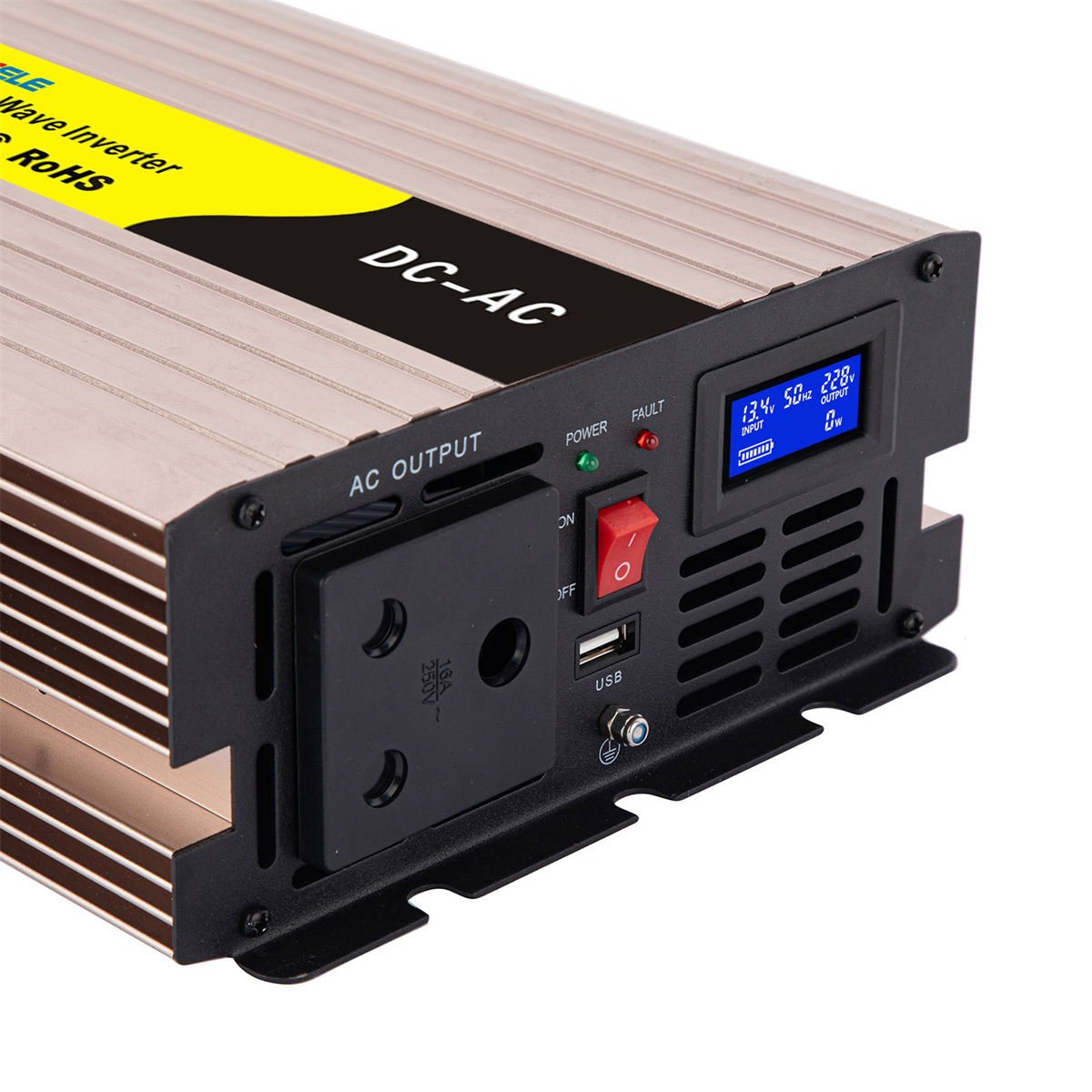 A 1500W pure sine inverter suits a van used for weekends and remote work. It runs all the electronics at once, plus one kitchen appliance up to about 1,500W. The REP1500 pure sine wave inverter is rated 1500W continuous and 3000W peak, with THD below 3% on a linear load. That peak rating helps with short starting surges, such as a blender motor.
Size matters in a van as well. The REP1500 measures 310 x 180 x 80 mm and weighs 2.9 kg, so it fits under a bed platform or inside a seat base near the battery. Its 12V model, REP1500-121, has a no-load current below 0.8A. Left switched on all day with nothing plugged in, that is under 10W, or up to about 230Wh per 24 hours, so switch it off when you are not using AC power.
The habit that makes 1500W work
Run one heating appliance at a time. A kettle (1,500W) and a coffee maker (1,000W) together come to 2,500W and will trigger overload protection. Boil water first, then brew.
When to choose 2000W
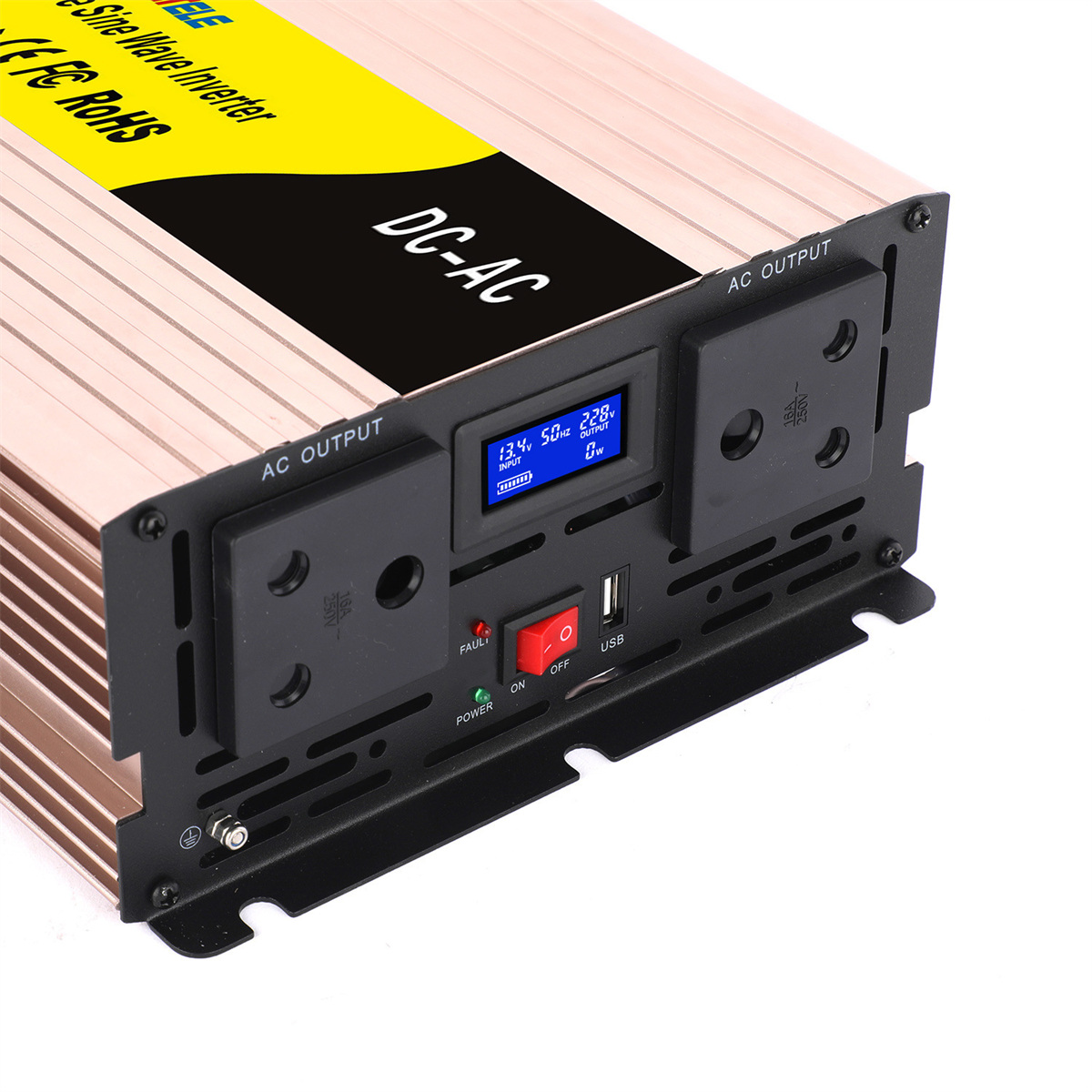 Choose 2000W when you plan to cook electrically or live in the van full time. A single-zone induction cooktop at full power, a hair dryer on high, or a microwave plus a laptop and router running together all go beyond 1,500W. The REP2000 pure sine wave inverter is rated 2000W continuous and 4000W peak, measures 355 x 205 x 95 mm and weighs 3.9 kg. The 12V model, REP2000-121, has a no-load current below 0.9A.
The extra 500W does not come free. A 2000W load draws about 185A at 12V, so cables, fuse and battery must all be rated for it. If your van has room for a 24V lithium battery, the REP2000-241 halves the current to about 90A, and its no-load current drops below 0.5A.
How much battery a camper van inverter needs
The inverter size sets how much current the battery must deliver. The daily energy use sets how big the battery must be. Here is a sample day for a remote worker in a 12V van:
| Use | Watts x time | AC energy | From battery (÷0.9) |
|---|---|---|---|
| Laptop, 8 hours | 80W x 8h | 640Wh | 711Wh |
| Satellite internet, 6 hours | 75W x 6h | 450Wh | 500Wh |
| Kettle, 3 boils | 1,500W x 0.25h | 375Wh | 417Wh |
| Coffee maker | 1,000W x 0.2h | 200Wh | 222Wh |
| Total on the inverter | 1,665Wh | about 1,850Wh |
Add the 12V DC loads (a compressor fridge often uses 400 to 700Wh a day) and this van needs about 2.3 to 2.6kWh per day. A 12V 200Ah LiFePO4 battery stores about 2,560Wh, which covers one day without charging. For two days off-grid, or for induction cooking, plan on 300 to 400Ah, plus solar panels and a DC-DC charger from the alternator.
Battery current limits matter too. Check that the battery's BMS allows a continuous discharge of at least 150A for a 1500W inverter and 200A for a 2000W inverter at 12V. A 100Ah battery with a 100A BMS will shut off before the inverter reaches full power.
Wiring the inverter in a van
- Mount the inverter close to the battery. Short DC cables reduce voltage drop at 140 to 185A.
- Fit a fuse or DC breaker on the positive cable near the battery, sized above the inverter's maximum DC current and below the cable's rating.
- Leave space around the cooling fans. The REP series runs from -10°C to +50°C, and a closed cabinet in summer sun can get hot.
- Bond the inverter's ground terminal to the van chassis.
- Do not run the inverter from the vehicle's starter battery for long sessions. Our article Will a Car Power Inverter Drain My Battery With the Engine Off? explains why.
1500W vs 2000W at a glance
| Item | REP1500 (12V model REP1500-121) | REP2000 (12V model REP2000-121) |
|---|---|---|
| Continuous / peak output | 1500W / 3000W | 2000W / 4000W |
| DC current at full load, 12V | about 140A | about 185A |
| No-load current | <0.8A | <0.9A |
| 12V input range | 10 to 15.5V | 10 to 15.5V |
| Size / net weight | 310 x 180 x 80 mm / 2.9 kg | 355 x 205 x 95 mm / 3.9 kg |
| Suggested 12V lithium battery | 200Ah or more | 300Ah or more, or 24V |
| Best for | Weekend trips, remote work, kettle or coffee one at a time | Full-time van life, induction cooking, hair dryer |
FAQ
Can a 1000W inverter run a camper van?
Yes, if you only charge electronics and use small appliances under 1,000W. Most 120V kettles and hair dryers are larger than that.
Is a bigger inverter always better?
No. A larger inverter costs more, takes more space, needs thicker cables and usually draws more power at idle. Buy for your largest real load plus a sensible margin.
Why pure sine wave for a van?
Laptop chargers, induction cooktops, microwaves and motor loads run cooler and quieter on clean AC with low distortion.
Should my van use 12V or 24V?
12V is simplest for most vans up to 2000W. Consider 24V if you plan on 2000W or more of regular cooking, because the current is half as high.
Conclusion
For a typical 12V camper van, a 1500W pure sine inverter on a 200Ah lithium battery covers work, charging and one kitchen appliance at a time. Step up to 2000W, and to 300Ah or a 24V bank, when induction cooking, a hair dryer or full-time living is part of the plan. Size the cables, fuse and battery BMS for 140 to 185A, and switch the inverter off when it is not in use.
See full specifications and model codes on the REP1500 pure sine wave inverter and REP2000 pure sine wave inverter pages. For help matching an inverter to your van build, or for distributor and OEM orders, contact us: email Long@rogerele.com, Tel +86-577-62769701, WhatsApp +86-13587757588.
