
Will a Car Power Inverter Drain My Battery With the Engine Off?
Date:2026-10-04 Click:32 Source:Rogerele
Quick answer: Yes—any car power inverter draws from the battery with the engine off. Unload (idle) current alone can slowly flatten a starting battery; a real AC load drains it much faster. Rogerele 12V REP pure sine models list unload under 0.3–0.9A and low-voltage protect near 10V, so short, light use can be fine. Hours of continuous AC, or leaving the inverter on with nothing plugged in, are not. Prefer an auxiliary bank for engine-off work, or keep sessions short and switch the unit off when idle.
This page focuses on drain with the engine off: unload versus load current, low-voltage alarm and protect, starting battery versus aux, and when parked use is OK. For dual-battery setup detail, see do I need an auxiliary battery. For amp-hour runtime math, see how long a battery will run an inverter. For socket versus hardwire limits, see hardwire vs cigarette lighter.
Does an inverter drain the battery when nothing is plugged in?
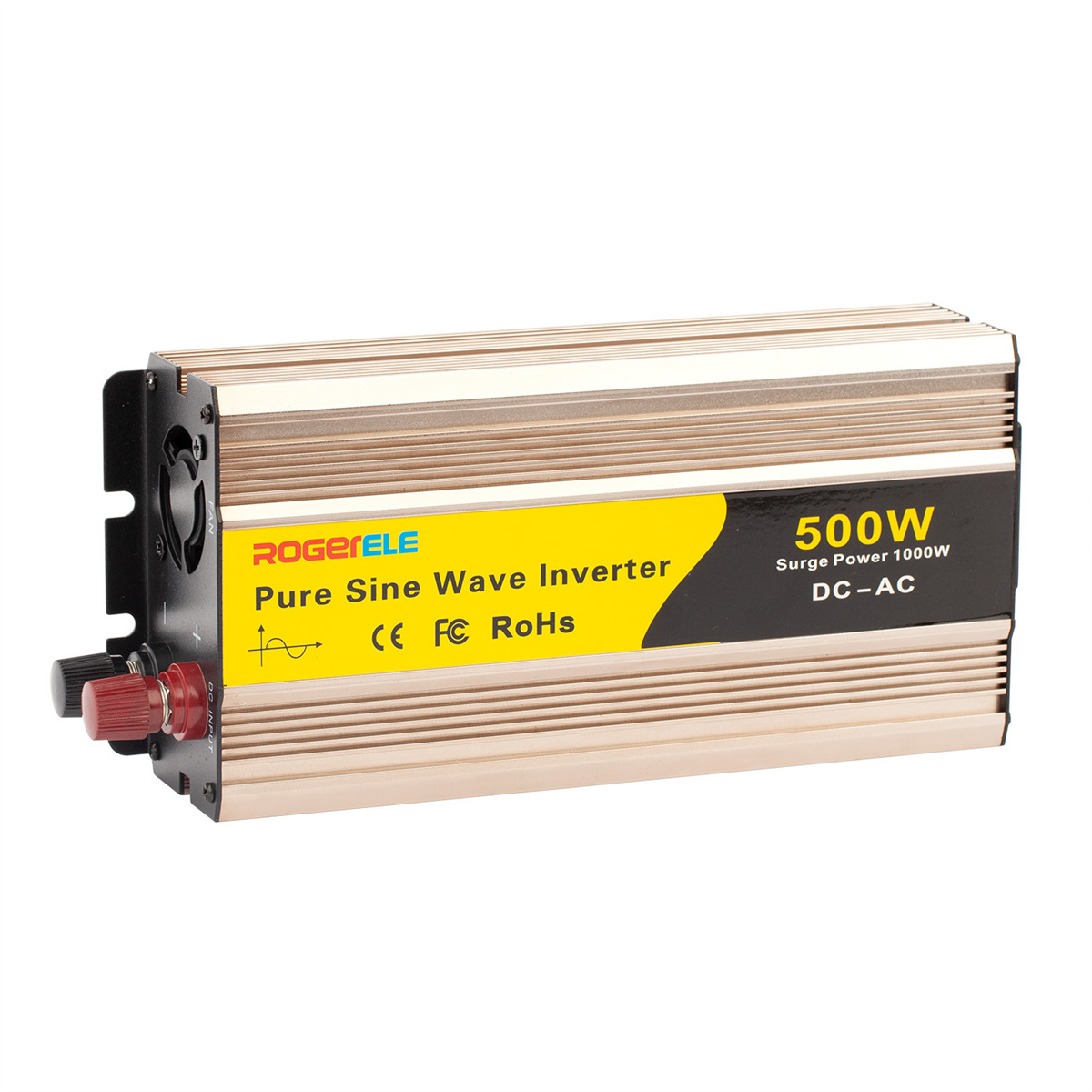
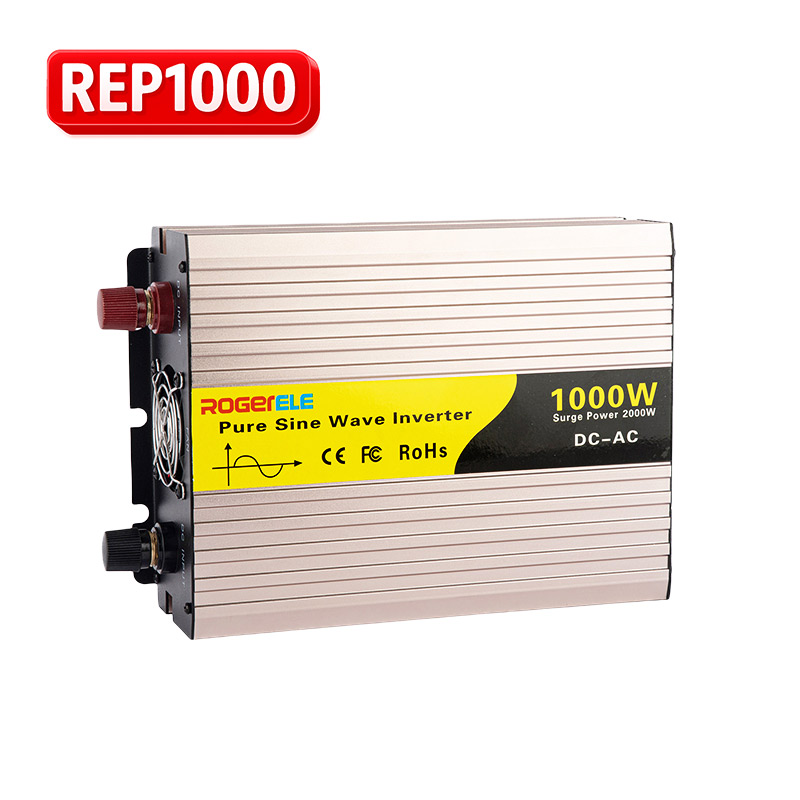
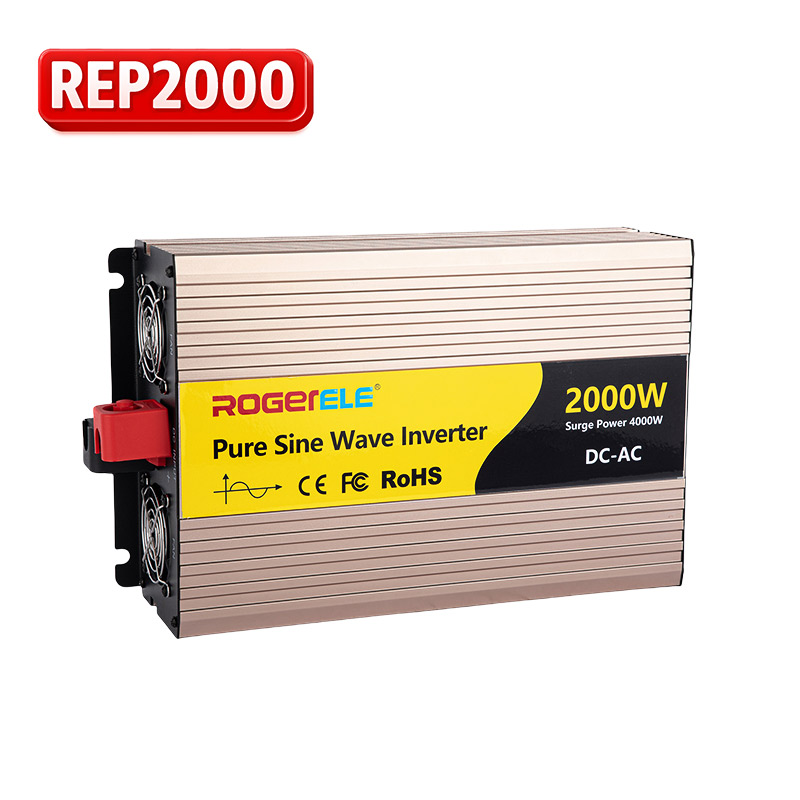
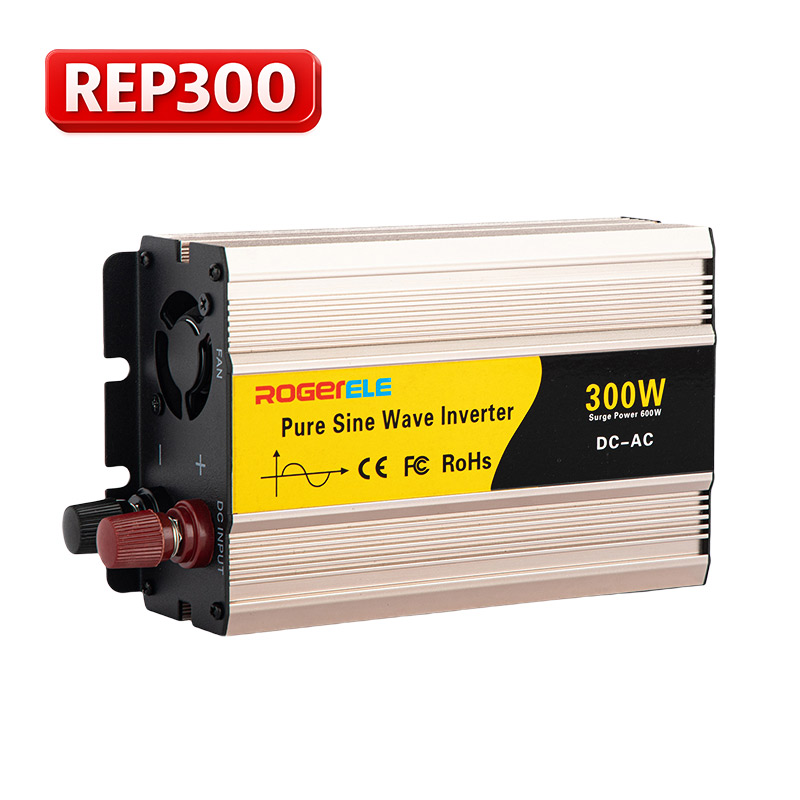
Yes. With the DC input live and the inverter switched on, the electronics still draw a small idle current even with no AC load. Product pages call this unload current. On 12V models it is listed as less than 0.3A for the REP300, less than 0.4A for the REP500 and REP1000, and less than 0.9A for the REP2000.
Industry-practice rough estimate (not a lab measurement): at under 0.4A on a 12V bank, idle draw is under about 5Wh per hour. Over eight hours that is under about 40Wh—roughly 3Ah from a 12V battery before you count aging, temperature, or other vehicle drains. Under 0.9A (REP2000 class), the same eight-hour idle is under about 7Ah. That may not sound large next to a 60–70Ah starter, but starters are not meant for deep discharge, and parasitic vehicle loads add more. Switch the inverter off when you are not using AC.
How much faster does a real AC load drain the battery?
Load draw dwarfs unload. At the published 12V maximum efficiency of 90%, a rough industry-practice estimate of DC input current is AC watts ÷ 12 ÷ 0.90. Examples (ceiling math, not measured on your vehicle):
- About 60W AC (phone and laptop chargers): roughly 5–6A from 12V.
- About 120W AC (small electronics workstation): roughly 11A.
- About 500W AC: roughly 46A.
- About 1000W AC: roughly 93A.
One hour at 120W is on the order of 11Ah removed; one hour at 500W is on the order of 46Ah. A typical passenger-car starting battery cannot support that with the engine off without risking a no-start. Pure sine THD is under 3% on a linear load on these product pages, which suits sensitive electronics, but waveform quality does not reduce DC amp-hours drawn from the battery.
What do low-voltage alarm and protect do with the engine off?
12V REP models list input range 10–15.5V. When battery voltage falls, protection steps in before the pack is ruined or the vehicle cannot crank:
- Low-voltage alarm: 10.5±0.5V (audible/LED warning that voltage is getting low).
- Low-voltage protect (shutdown): 10±0.5V (output stops so the pack is not pulled lower).
- Low-voltage recover: 13±0.5V on the REP500; 12.3±0.5V on the REP1000 and REP2000 12V pattern (needs a recharge or running engine before AC returns).
With the engine off, rest voltage already sits below charging voltage. A long idle session can hit the ~10.5V alarm, then shut down near ~10V. That protects the inverter and limits further drain, but if you were on the starting battery alone, you may still need a jump or charger to start. Do not treat LV protect as a substitute for an auxiliary bank sized for your hours of use.
| 12V model | Rated / peak | Unload (12V) | LV alarm | LV protect | LV recover |
|---|---|---|---|---|---|
| REP500 | 500W / 1000W | <0.4A | 10.5±0.5V | 10±0.5V | 13±0.5V |
| REP1000 | 1000W / 2000W | <0.4A | 10.5±0.5V | 10±0.5V | 12.3±0.5V |
| REP2000 | 2000W / 4000W | <0.9A | 10.5±0.5V | 10±0.5V | 12.3±0.5V |
Figures above are from the live product pages (2026-10-04). REP500 lists intelligent air cooling and a 2-year warranty; REP1000 adds QC3.0 USB, about 275×180×80 mm and ~2500 g; REP2000 is about 355×205×95 mm and ~3900 g, also 2-year warranty. Max efficiency is 90% on 12V for these models.
Starting battery vs auxiliary: which one should the inverter use?
The starting battery is built for short cranking pulses. Using it for hours of AC with the engine off is the classic path to a no-start. An auxiliary (house / leisure / LiFePO4) bank is sized for cycling; the inverter should connect to that bank so the starter stays reserved for cranking. Isolators and DC-DC chargers keep the house pack topped up while driving—covered in the auxiliary-battery article linked above, not repeated here.
Rule of thumb for engine-off decisions (general practice):
- Starting battery alone: brief, light AC only—minutes, not overnight—and plan to start the engine soon after.
- Auxiliary bank: any planned engine-off session of more than a short stop, continuous loads, or any wattage that would pull tens of amps for long.
When is engine-off inverter use OK?
Engine-off use is reasonable when you control both time and watts:
- OK examples: charging a phone or laptop for 15–30 minutes on a REP300 or REP500 after a drive; a short roadside stop with a known light load; testing an AC device for a few minutes.
- Not OK on the starter alone: leaving the inverter powered overnight with or without a load; running a fridge, cooler, or heater for hours; power tools or kitchen loads that sit near hundreds of watts continuous; “I will just leave it on in case I need it.”
If you need AC for hours parked, size the house battery and the inverter together, then use the runtime guide for amp-hour planning. Keep the inverter switched off whenever AC is not required so unload current does not accumulate.
Practical habits that cut engine-off drain
Switch the inverter off at the unit (or a DC disconnect) when idle. Prefer the smallest continuous rating that covers the load—REP300 or REP500 for light electronics, REP1000 when you need headroom, REP2000 only when the watts demand it—because larger units list higher unload current. Confirm 12V input matches a 12V bank (10–15.5V range). Match AC voltage and frequency to the appliance. For fleet or OEM questions, use the Rogerele contact page.
FAQ
Will a car power inverter drain my battery with the engine off?
Yes. Unload current drains slowly; an AC load drains much faster. Keep engine-off sessions short on a starting battery, or use an auxiliary bank and switch the inverter off when idle.
How much current does an idle REP inverter draw at 12V?
Published unload figures: REP300 under 0.3A; REP500 and REP1000 under 0.4A; REP2000 under 0.9A. These are maximums from the product pages, not a guarantee of zero drain.
At what voltage does a 12V REP inverter shut down?
Low-voltage protect is 10±0.5V, with alarm at 10.5±0.5V. Recover is 13±0.5V on REP500 and 12.3±0.5V on REP1000/REP2000 (12V). Input operating range is 10–15.5V.
Can I leave the inverter on overnight with nothing plugged in?
Not recommended on the starting battery. Idle unload still removes amp-hours, and other vehicle loads add more. Switch it off, or run overnight AC only from a house battery sized for the hours you need.
Is pure sine better for engine-off battery life?
Pure sine (THD under 3% on a linear load per product pages) is better for sensitive electronics and many motors. It does not magically lower DC amp-hours; watt-hours in still come from the battery. Efficiency peaks at 90% on 12V for the models above—use that as a ceiling when estimating current, not as a measured reading on your install.
