
Do I Need an Auxiliary Battery for a Car Power Inverter?
Date:2026-09-30 Click:23 Source:Rogerele
Quick answer: A short laptop or phone charge while the engine is running can usually stay on the vehicle starting battery. Continuous loads, camping with the engine off, a fridge, tools above a few hundred watts, or any plan that risks a no-start tomorrow need a second deep-cycle or LiFePO4 house battery charged through an isolator or DC-DC charger — with the pure sine wave inverter wired to that house bank, not to the starter alone.
This page focuses on when one battery is enough and when you need an auxiliary (dual-battery) setup. For wattage and 12V vs 24V, see what size inverter for a car or truck. For cable, fuse and grounding, see how to install a car power inverter. For runtime math, see how long a battery will run an inverter. For waveform choice, see pure sine vs modified sine wave.
When is the car starting battery enough for an inverter?
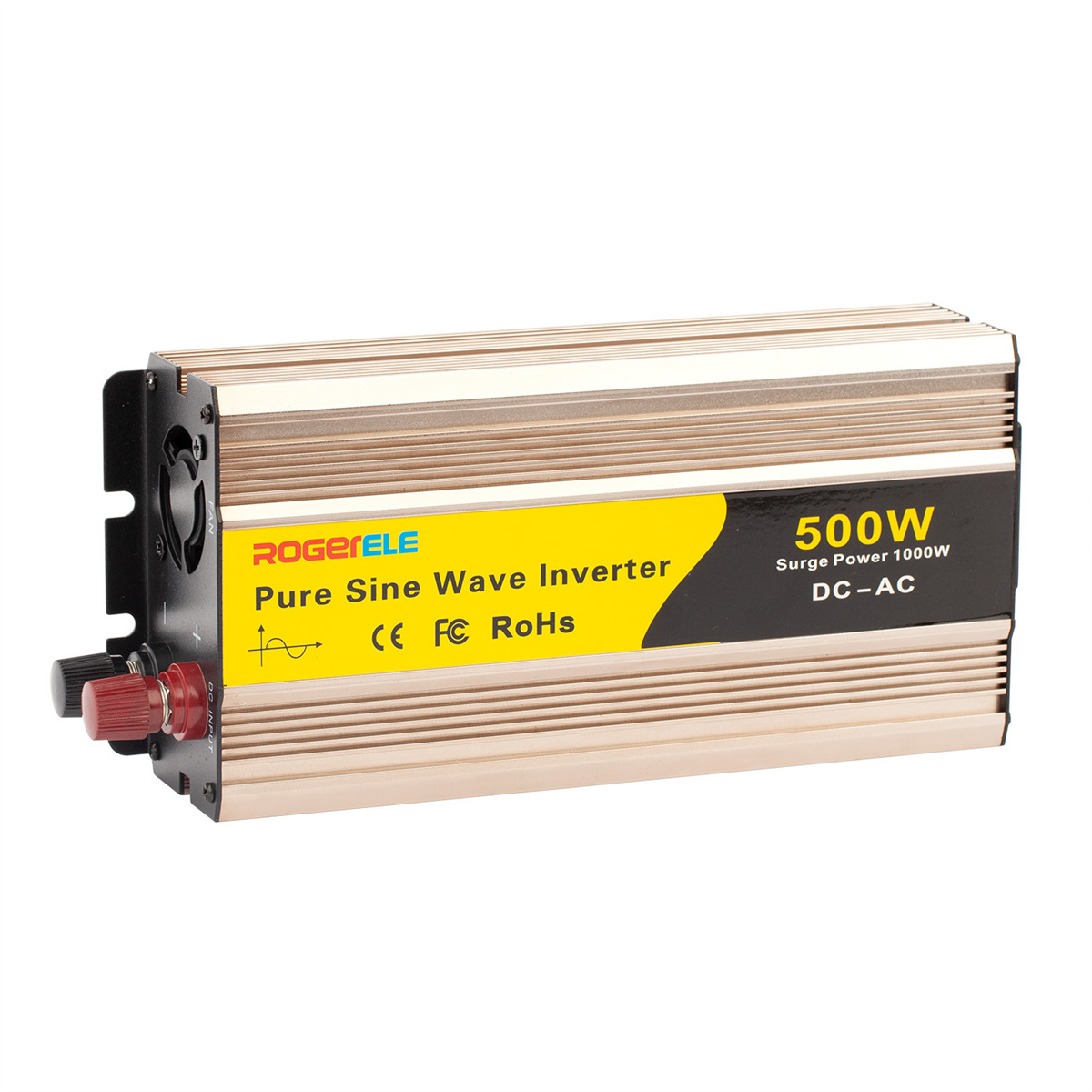
Rogerele REP pure sine wave inverters convert 12V, 24V or 48V DC into AC. The starting battery is built for short cranking pulses, not deep daily cycling. It is usually acceptable when all of these are true:
- The load is light and brief — roughly under 150–300W for minutes, not hours (general practice; check your device labels).
- The engine is running, or you will only use the inverter for a short stop with the engine off.
- You are not leaving a fridge, CPAP, or other continuous load overnight on that battery alone.
- You accept that a dead start is possible if you misjudge the draw.
A cigarette-lighter socket is typically fused around 10–15A (about 100–150W at 12V). Beyond the lightest plug-in use, wire even a 300W or 500W unit to the battery with a fuse on the positive cable. For gauge and fuse placement, use the install guide linked above — REP pages do not publish a factory cable chart.
When do I need an auxiliary or house battery?
Add a second battery (often called an auxiliary, leisure or house battery) when any of these apply:
- You want AC with the engine off — camping, overlanding, van life, roadside work, or tailgating for hours.
- The load is continuous: fridge, cooler, CPAP, laptop workstation, lights plus charging.
- You run mid-size inverters such as 1000W, 2000W or 3000W for tools or kitchen loads; peak current on 12V is high even if average watts look modest.
- You must guarantee a start tomorrow — the house bank can go flat without draining the starter.
Prefer a deep-cycle AGM/GEL or LiFePO4 battery sized for the energy you need, not another starter. Starting batteries dislike repeated deep discharge. LiFePO4 usually allows deeper usable State of Charge, but needs a matching charger profile — one reason DC-DC chargers are common in dual-battery installs (general practice).
How do isolators and DC-DC chargers protect the starting battery?
In a dual-battery system the inverter should see the house battery; the starter stays reserved for cranking. Two common ways to charge the house bank from the alternator (general practice, not a Rogerele product feature):
- Voltage-sensitive relay (VSR) / battery isolator. Links the banks when alternator voltage is high; opens when the engine is off so house loads cannot flatten the starter.
- DC-DC (B2B) charger. Regulates charge into the house battery. Useful with smart alternators and LiFePO4, where a simple parallel cable can undercharge or stress the system.
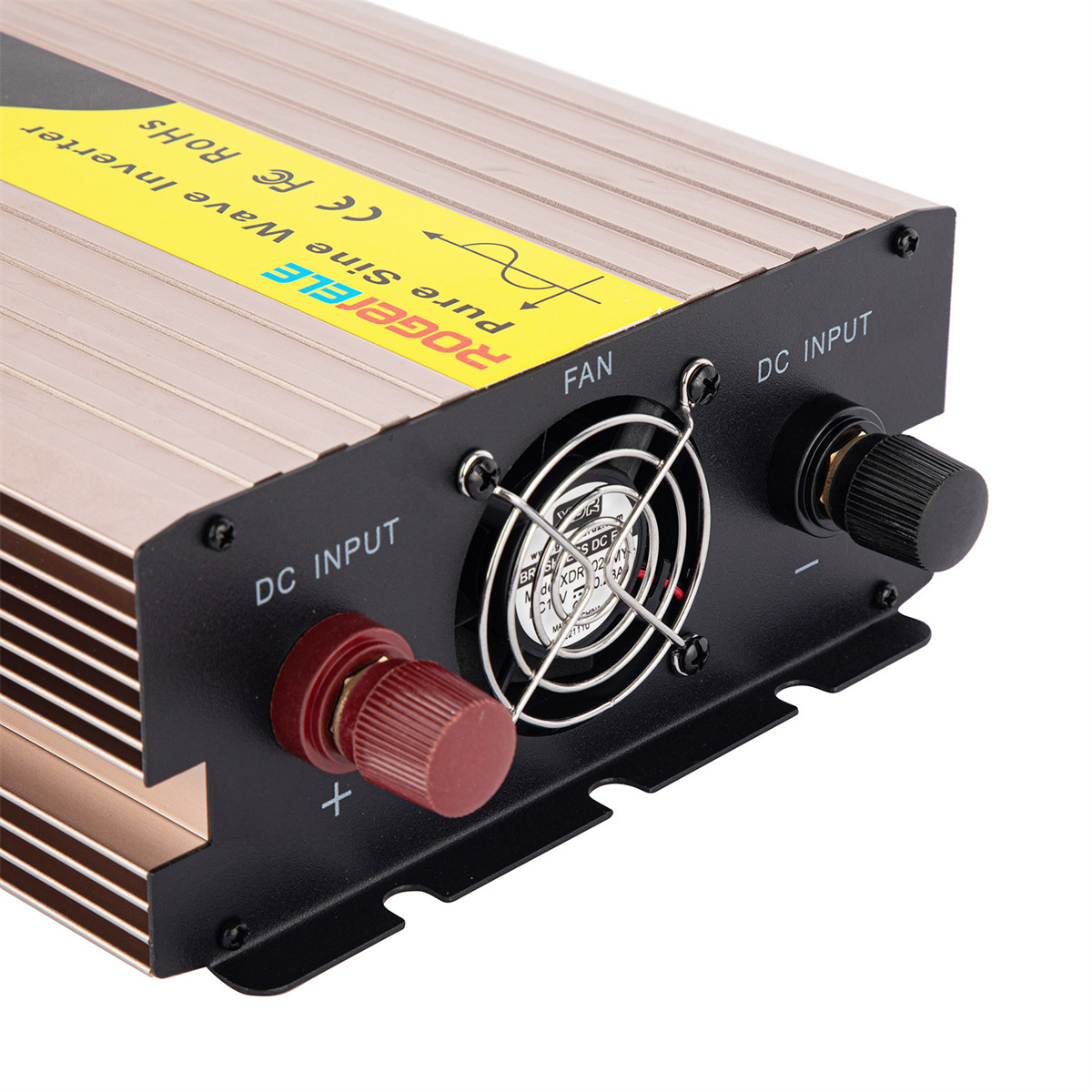
Fuse starter and house positives near their posts, and size cable for inverter and charger current. Do not use a thin chassis return for high inverter current — run a dedicated negative to the house battery.
How does battery choice tie to inverter runtime and low-voltage cut-off?
Runtime is roughly battery amp-hours × usable fraction × battery volts × inverter efficiency ÷ AC watts — see the linked runtime article for examples. On REP pages, 12V models list input range 10–15.5V, low-voltage alarm about 10.5V and shutdown about 10V (24V/48V scale to 20–31V / 40–61V). Published efficiency is about 90% and up. No-load current still drains the bank — under 0.4A at 12V on 1000W models and under 0.9A at 12V on 2000W — so switch the inverter off when idle.
A starter near 12.0–12.2V at rest already has little reserve; long idle loads often hit the ~10.5V alarm. A sized house bank keeps voltage above cut-off for the hours you planned and leaves the starter full.
| Use case (general practice) | Typical AC load | Battery approach | Example REP size |
|---|---|---|---|
| Phone / laptop, engine running | 40–100W | Starting battery OK for short use | 300W / 500W |
| Fridge or CPAP, engine off | 50–150W continuous | House deep-cycle / LiFePO4 + isolator or DC-DC | 500W / 1000W |
| Power tools, microwave, kettle | 800–2000W+ peaks | House bank sized for peaks and cable/fuse for current | 2000W / 3000W |
| Truck / RV high power (USA 120V/60Hz) | Several kW | Dedicated house bank; often 24V system | See 6000W truck/RV guide |
Device watts above are typical label ranges, not Rogerele lab measurements. Match the AC voltage suffix (100–120V vs 220–240V) and 50Hz or 60Hz to your appliances.
How should I wire the inverter on a dual-battery vehicle?
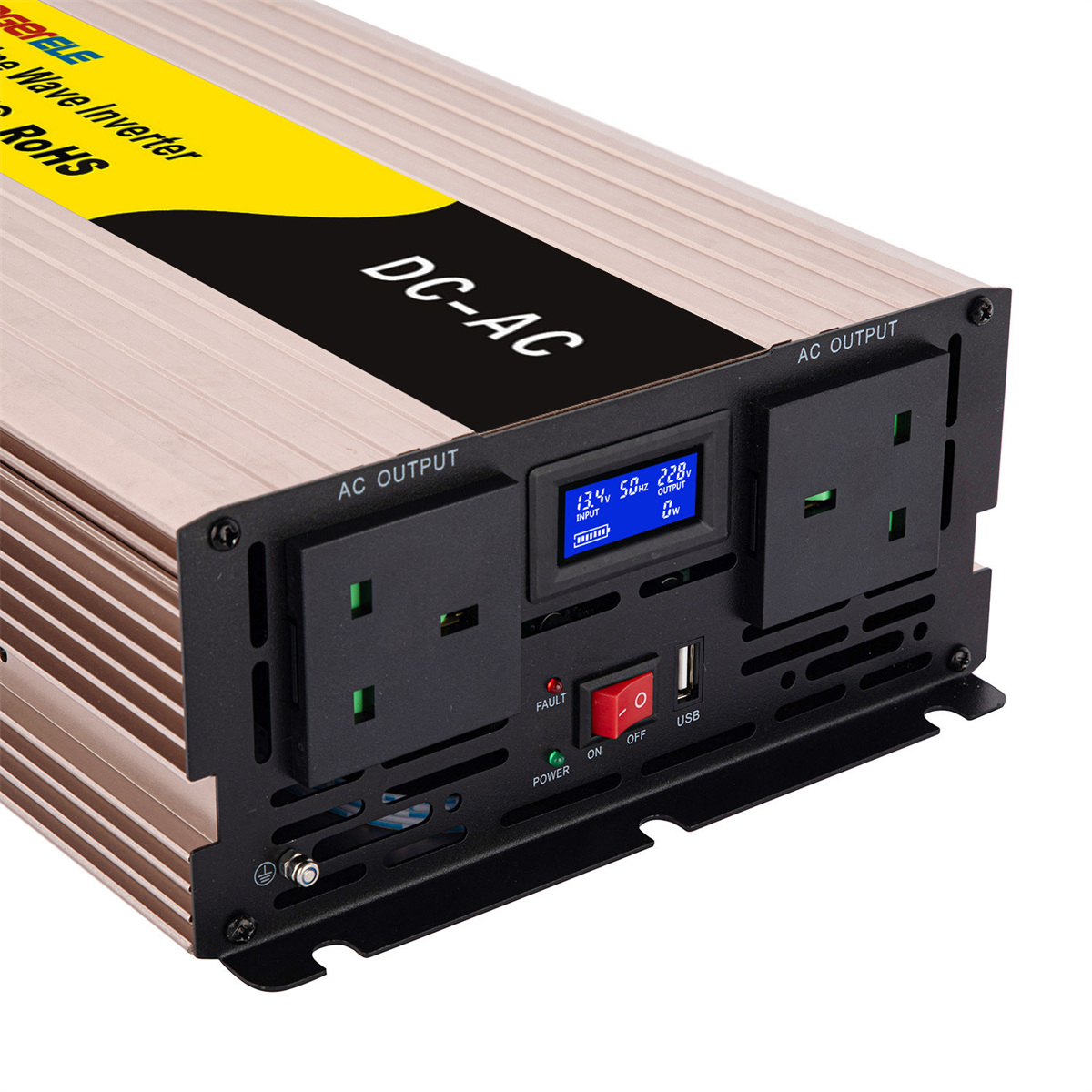
- Mount the inverter on a dry, cool, ventilated surface near the house battery when possible — short DC cable runs cut voltage drop.
- Positive: house battery → DC fuse/breaker close to that post → inverter positive.
- Negative: house battery negative → inverter negative (do not rely on a long chassis path for high current).
- Charge path: alternator / starter battery → isolator or DC-DC → house battery, each fused as the charger maker specifies.
- Confirm DC input matches the bank: 12V units 10–15.5V, 24V units 20–31V, 48V units 40–61V on the REP sheets. A 12V inverter on a 24V truck bank will be damaged.
Order pure sine wave for electronics and compressors; see the pure-sine comparison article for why. For fleet or OEM questions, use the Rogerele contact page.
FAQ
Can I run a car inverter only on the starting battery overnight?
Not for continuous loads. You can drop below reliable cranking voltage or hit the inverter’s ~10V low-voltage shutdown on a 12V model. Use a house battery for overnight AC.
Do I need LiFePO4, or is AGM deep-cycle enough?
Either can work. AGM is familiar and often cheaper up front; LiFePO4 usually offers more usable amp-hours and cycle life but needs a compatible DC-DC or charger profile. Choose by budget, weight and recharge method (general practice).
Should the inverter connect to both batteries in parallel?
No for a dual-battery design. Parallel starting + house without isolation still lets house loads kill the starter. Charge the house bank through an isolator or DC-DC; power the inverter from the house bank only.
Does a larger inverter always need an auxiliary battery?
Not always if the engine is running and use is brief, but larger units draw more DC current (about watts ÷ volts ÷ ~0.9). A 2000W load at 12V is roughly 180A-class current and stresses thin cables and a small starter quickly. House battery plus correct cable/fuse is the safer default.
Where do I start if I only need laptop power in the cab?
A 300W or 500W pure sine unit with the engine running or for short stops may stay on the starter. Move to a house bank for continuous loads or a guaranteed start. See the REP pure sine wave inverter series for 300W–6000W options.
