
Hardwire vs Cigarette Lighter for a Car Power Inverter: Which Do You Need?
Date:2026-10-03 Click:30 Source:Rogerele
Quick answer: Use the 12V accessory (cigarette lighter) socket only for very small pure sine loads that stay under the socket fuse—often about 10–15A in US cars and trucks, or roughly 120–180W continuous in industry practice. For anything near 300W continuous and above, hardwire the inverter to the vehicle battery (or an auxiliary battery) with proper cable and a fuse at the battery. A plug-in REP300 is the light-duty end of the Rogerele REP series; REP1000, REP1500 and REP2000 need a hardwired DC path. This page is the socket-vs-hardwire decision—not a full install chart. For wire size and fuse placement, see how to install a car power inverter.
US drivers usually ask this after a laptop charger, CPAP or small fridge fails on a lighter plug, or after a fuse pops. The socket is convenient. Hardwiring is what makes a real car or truck inverter safe and reliable.
What limits a cigarette lighter (12V accessory) socket?
Most US cars and light trucks feed the accessory socket through a fuse sized for phone chargers and small adapters—not for a continuous AC heater or compressor. In industry practice (not a Rogerele lab measurement), many sockets are fused around 10–15A. At 12V that is about 120–180W before inverter inefficiency and cable drop. Pull more and you risk a blown fuse, a melted plug, or voltage sag that trips the inverter’s low-voltage alarm. Socket wiring is also thin and shared with other cabin loads. Treat the accessory socket as a temporary path for light electronics, not as a permanent power plant.
When is a cigarette lighter inverter enough?
A socket-fed setup can work when the load is intermittent and small (phone/laptop charging, LED lights, a small fan), continuous watts stay well under the socket fuse ceiling, and you run the engine or confirm the starting battery can handle the draw. Use a small pure sine model—not a 1000W+ box forced onto a lighter plug.
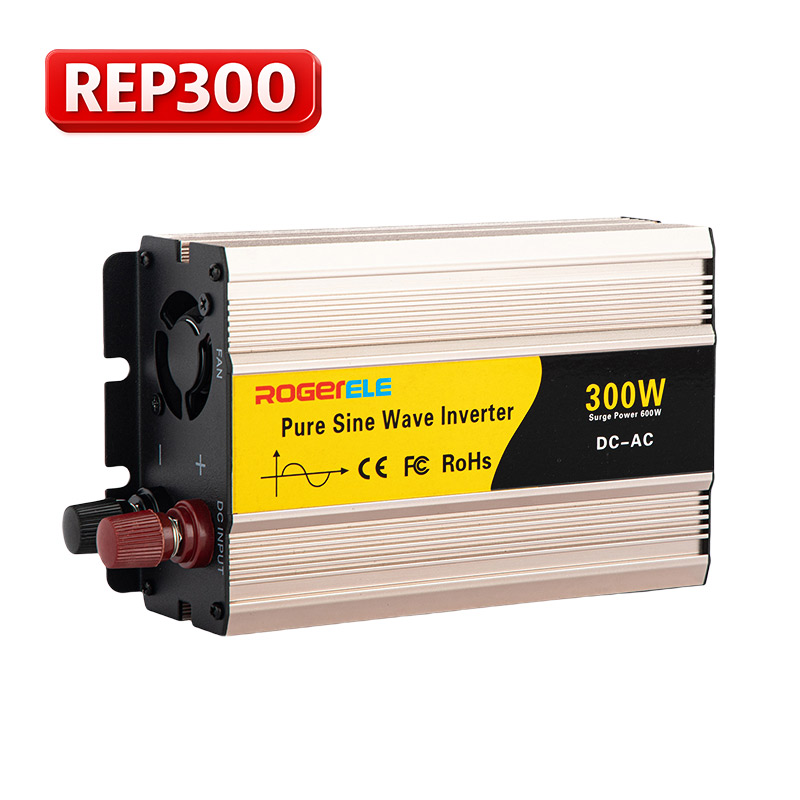
On the Rogerele site, the 300W pure sine wave inverter (REP300) is rated 300W continuous and 600W peak, with THD under 3% on a linear load and maximum efficiency of 90%. For 12V / 120V-class models (REP300-121), unload current is less than 0.3A, input range is 10–15.5V, and the unit is 208×112×60 mm at about 850 g net. That size class is the practical plug-in end of the series—still respecting the vehicle fuse first.
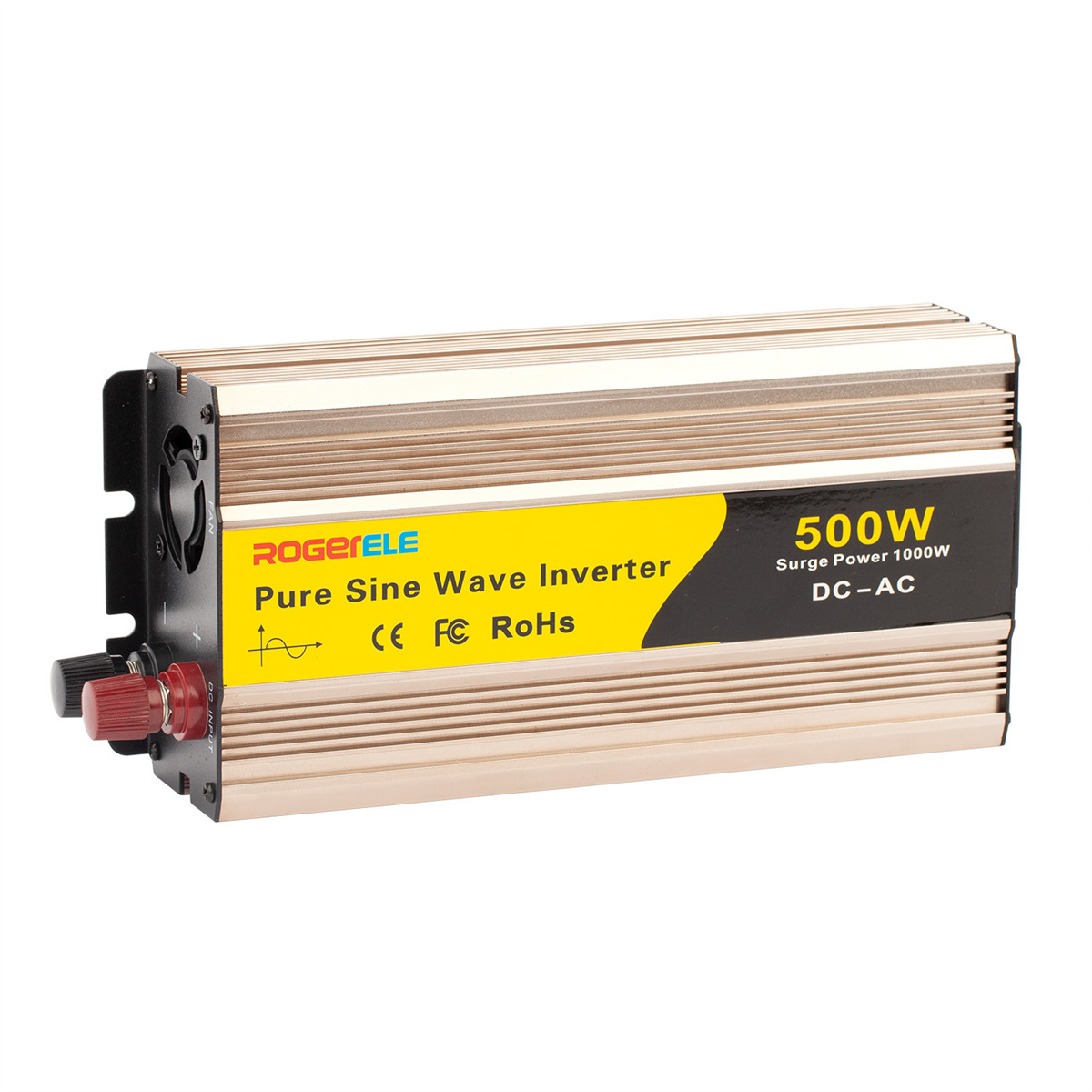
The 500W pure sine wave inverter (REP500) is rated 500W / 1000W peak. On 12V (REP500-121) unload current is less than 0.4A and max efficiency is 90%. Even at 500W, industry practice says hardwiring is safer once you approach or exceed typical socket capacity. Do not assume a lighter plug can feed 500W continuous.
When should you hardwire to the battery?
Hardwire when you need continuous power, higher watts, or overnight use without melting the accessory circuit. Connect DC cables to the battery (or an isolated aux bank), place a fuse near the battery positive, and size the cable for the current. That is the standard path for ~300W+ continuous vehicle use in practice, and it is required for 1000W–2000W class loads.
Rogerele REP pure sine wave inverters convert 12V / 24V / 48V DC from dedicated batteries or a vehicle DC outlet into 100–120V or 220–240V AC. Specs below are from the live product pages:
| Model | Rated / peak | 12V unload (less than) | Max efficiency (12V) | Typical connection |
|---|---|---|---|---|
| REP300 | 300W / 600W | 0.3A | 90% | Socket only if under fuse; hardwire preferred for sustained use |
| REP500 | 500W / 1000W | 0.4A | 90% | Hardwire in practice |
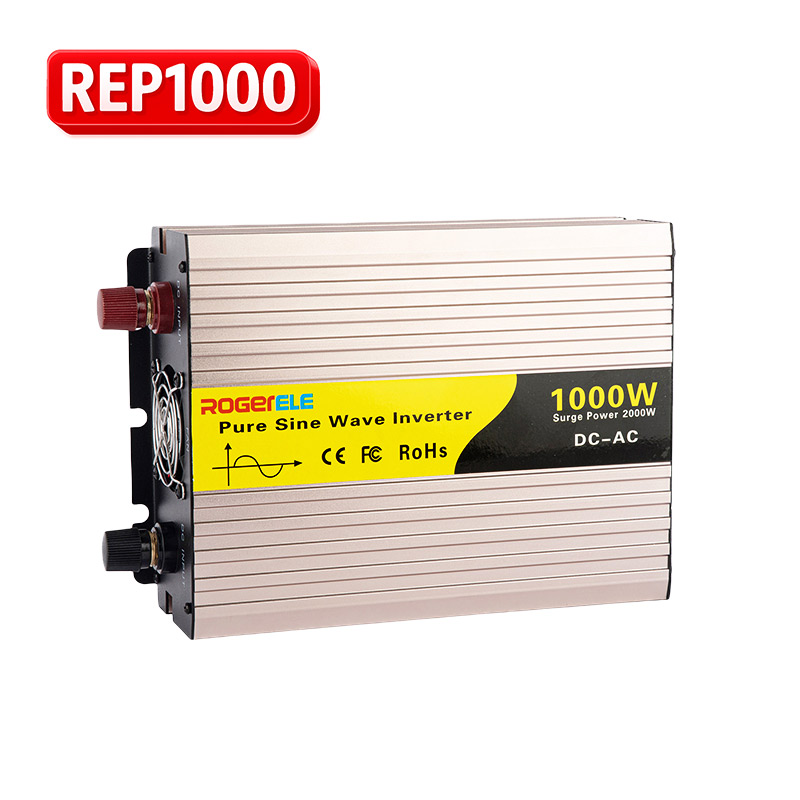
| REP1000 | 1000W / 2000W | 0.4A | 90% | Hardwire required |
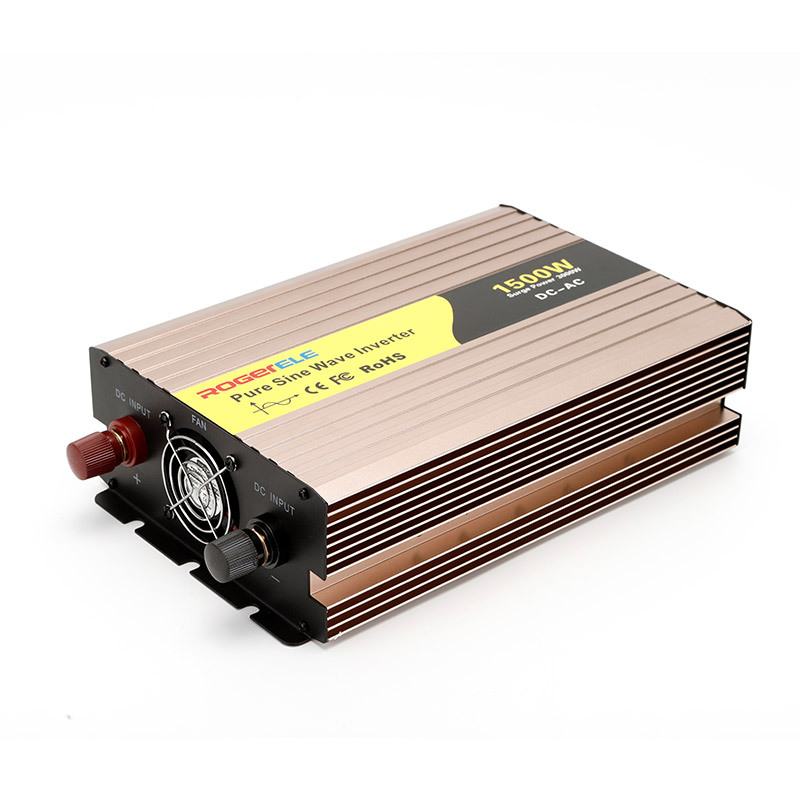
| REP1500 | 1500W / 3000W | 0.8A | 90% | Hardwire required; consider 24V |
| REP2000 | 2000W / 4000W | 0.9A | 90% | Hardwire required; prefer 24V/48V |
REP1000 lists QC3.0 USB on 12V/24V models, input range 10–15.5V on 12V units, and protection for low voltage, over voltage, overload, over temperature, short circuit and reverse polarity (fuse burn-out). Warranty across these pages is 2 years. Cooling is intelligent air cooling. Peak power is a short surge rating, not a continuous heater budget.
Hardwire to the starting battery or an auxiliary battery?
Hardwiring to the starting battery is fine for short runs with the engine on, or light intermittent loads that leave cranking reserve. For overnight CPAP, a fridge, or daily high-watt use with the engine off, an auxiliary (house) battery or dual-battery isolator is safer so you do not strand the truck. See do I need an auxiliary battery for a car power inverter.
On 12V, current rises quickly with watts. At the published 90% maximum efficiency (not a measured field current), 1000W is on the order of ~90A DC, and 2000W is roughly double. That is why thicker cable, a battery-side fuse, and often a move to 24V or 48V input matter as you climb the REP ladder. Cable AWG and fuse amps belong in the install guide linked above.
Quick decision checklist for US cars and trucks
- Read the load nameplate in watts (or amps × volts). Add start margin for motors.
- If continuous watts stay well under ~120–180W and use is occasional, a small pure sine unit on the accessory socket may be enough.
- If you need ~300W continuous or more, plan to hardwire. Skip lighter adapters marketed for “1000W” boxes.
- Match AC output: most US gear wants 120V 60Hz. REP pages list 100/110/120V or 220/230/240V options.
- Match DC input: 12V for most passenger vehicles; 24V common on heavy trucks. Input ranges on 12V REP models are 10–15.5V.
- Prefer pure sine for electronics, CPAP and switching supplies. Rogerele REP units are pure sine with THD <3% on a linear load.
FAQ: hardwire vs cigarette lighter inverter
Can I run a 1000W inverter from a cigarette lighter?
No—not for real continuous use. A REP1000 is rated 1000W continuous / 2000W peak. Typical accessory sockets cannot deliver that DC current. Hardwire with correct cable and a fuse at the battery.
Is 300W safe on a 12V socket?
Only if your vehicle fuse and wiring support the draw and the load stays under that limit. Industry practice treats many sockets as ~10–15A (~120–180W). Check the fuse rating in the owner’s manual before assuming REP300 will run continuously from the lighter plug.
Do I need pure sine if I hardwire?
Hardwiring and waveform are separate choices. Hardwiring fixes the DC path. Pure sine (THD <3% on linear load per Rogerele REP pages) is still the right AC output for sensitive electronics and many motor loads.
Will hardwiring drain my starting battery overnight?
It can, if loads stay on with the engine off. Use an aux battery or isolator for overnight house loads, and treat the inverter’s low-voltage alarm/shutdown (on 12V REP models, alarm about 10.5±0.5V and protection about 10±0.5V) as a last backup—not as a plan.
Where do I get wire size and fuse values?
Use the dedicated install article: wire size and fuse for a car power inverter. This page only decides socket vs hardwire.
Wenzhou Rogerele Electronic Technology Co., Ltd. manufactures the REP pure sine series for vehicle, boat and battery DC systems. Browse the REP pure sine wave inverter series or reach the team via contact us on www.rogerele.com for model selection help.
