
Starlink Inverter Size: 300W vs 500W for RV and Truck
Date:2026-10-16 Click:5 Source:Rogerele
Quick answer: A Starlink dish in an RV or truck needs only a small pure sine inverter. Starlink lists average power at 25–40W for the Mini, 50–75W for the older Standard kit and 75–100W for the Standard 4 X kit. A 300W pure sine inverter runs a Mini or a Standard dish on its own. Choose 500W when the dish shares the inverter with a laptop, TV or CPAP, or when you run the newer Standard kit, whose power supply label reads 100–240V 2.5A. The Mini can also skip the inverter and run on 12–48V DC.
Remote work from a campground, a truck stop or a job site depends on the internet staying up all day. The problem is not the dish alone. It is the dish plus everything else plugged in at the same time, a 12V battery that has to last until the next charge, and an inverter that is too big wastes power at idle while one that is too small trips. This guide sizes the inverter with real numbers.
How much power does Starlink use?
Starlink publishes average consumption on its spec sheets. The Mini averages 25–40W and has a DC input rated 12–48V, 60W maximum. The older Standard kit averages 50–75W. The Standard 4 X kit averages 75–100W, and its power supply is labeled 100–240V ~ 2.5A. These are averages: draw rises when the dish is searching, heating to melt snow or moving lots of data, so leave headroom above the average.
That 2.5A label matters. At 120V it means the supply is built for up to about 300VA of input. A 300W inverter would run right at its limit if the supply ever pulled its full rating, which is why we suggest 500W for the newer Standard kit.
Why use a pure sine inverter for Starlink
The Starlink power supply, laptop chargers and CPAP machines are switch-mode electronics designed for utility power. A pure sine wave inverter with THD below 3% gives them the same smooth waveform as a wall outlet, so chargers run cooler and there is less risk of buzzing, resets or a router that keeps rebooting. Order the 100/110/120V, 60Hz version for US vehicles.
When a 300W inverter is enough
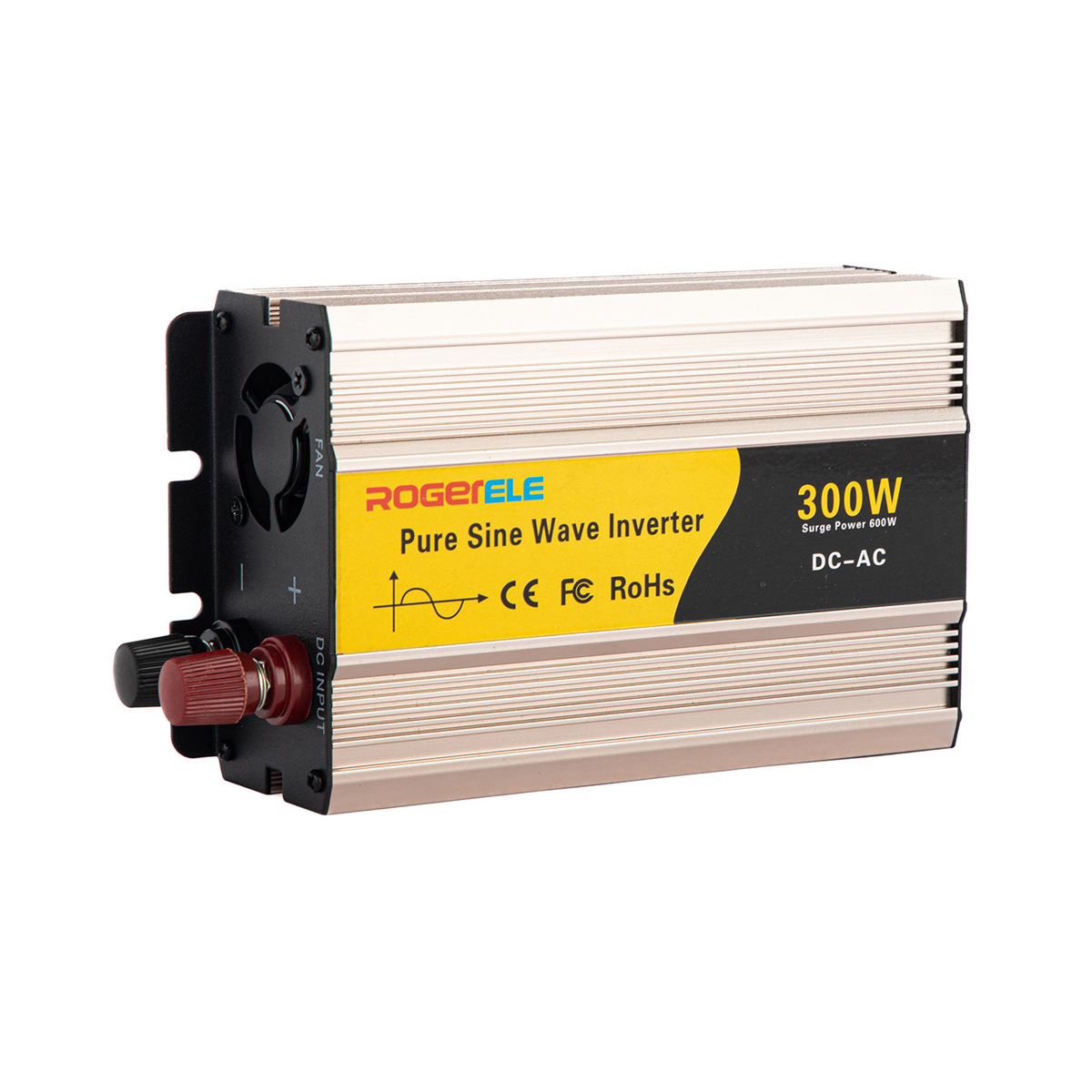 If the inverter powers Starlink plus a phone, a 300W unit is the efficient choice. A Mini at 40W or an older Standard dish at 75W leaves more than 200W of margin, enough to add a 65W laptop charger.
The REP300 pure sine wave inverter lists 300W continuous and 600W peak, up to 90% efficiency and a 5V / 1A USB port. The 12V model (REP300-121) draws under 0.3A with no load, which matters when the inverter stays on all day. It measures 208 × 112 × 60 mm and weighs 0.85 kg, so it fits behind a dash panel or in a sleeper cabinet.
Typical 300W setups
A Starlink Mini with a phone in a pickup truck. An older Standard dish with a tablet in a camper van. A Mini with a laptop on a contractor's truck. In each case the total stays under about 150W, half the rated output.
When to choose 500W
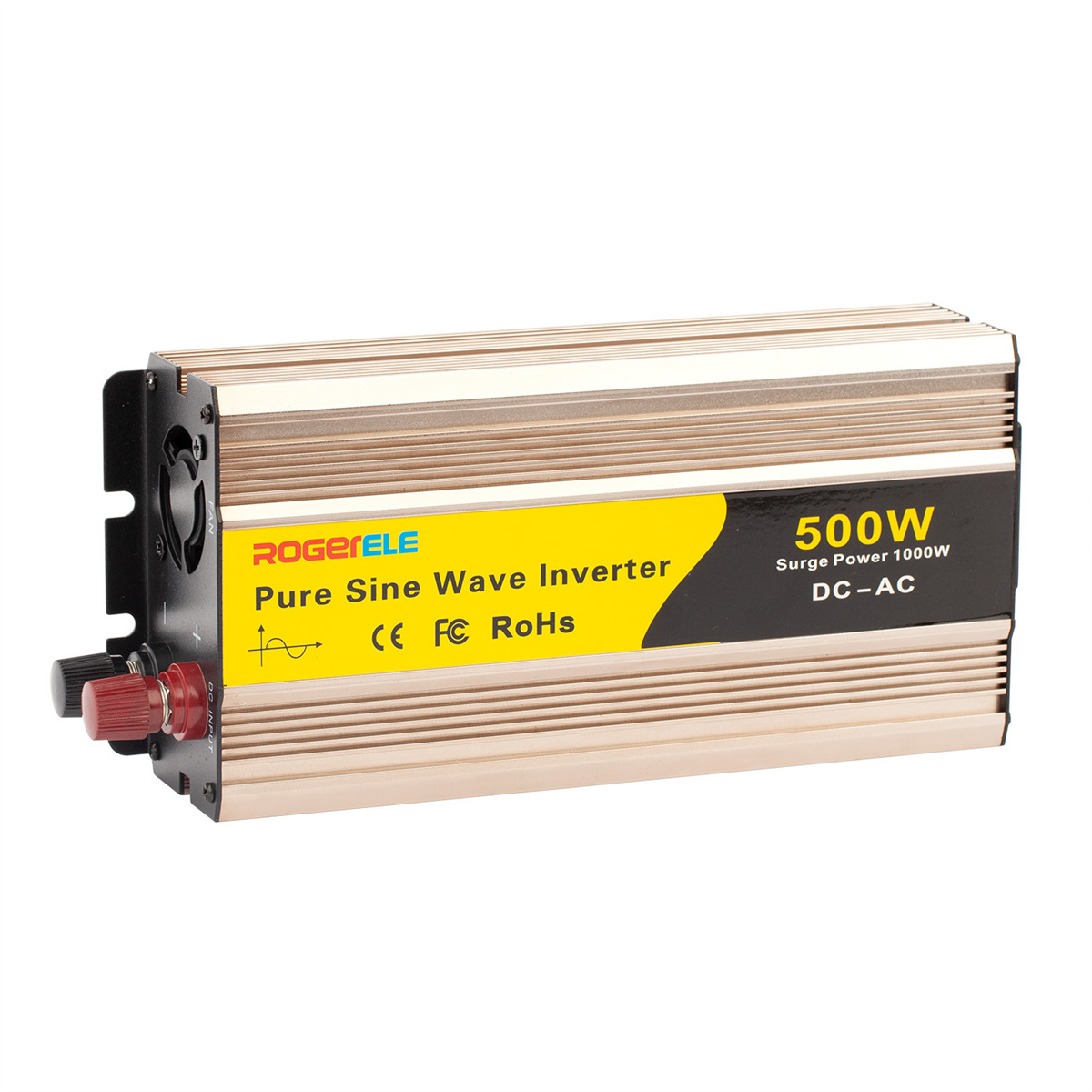 Pick 500W when Starlink is one of several loads. A Standard 4 X dish at up to 100W, a 90W laptop charger, a 32-inch LED TV and a CPAP can add up to roughly 300W at the same moment. A 500W inverter keeps that under about 60% of its rating and handles chargers that pull a short inrush when you plug them in.
The REP500 pure sine wave inverter lists 500W continuous and 1000W peak. Maximum efficiency is 90% for 12V, 92% for 24V and 95% for 48V models. The 12V model (REP500-121) draws under 0.4A with no load. It measures 255 × 112 × 60 mm and weighs 1.08 kg.
Load table: Starlink and common mobile-office devices
| Device | Typical AC watts | Fits 300W? | Fits 500W? |
|---|---|---|---|
| Starlink Mini (spec average) | 25–40W | Yes | Yes |
| Starlink Standard, older kit (spec average) | 50–75W | Yes | Yes |
| Starlink Standard 4 X kit (spec average) | 75–100W | Alone only | Yes |
| Laptop charger (label rating) | 45–100W | With Mini or older Standard | Yes |
| 32-inch LED TV (typical) | 30–60W | Tight with laptop | Yes |
| CPAP without heated humidifier (typical) | 30–60W | Tight | Yes |
| Standard 4 X dish + laptop + TV + CPAP | about 180–320W | No | Yes |
Device numbers other than Starlink are typical ranges; check the label on your own equipment and add the watts of everything that can run together.
REP300 vs REP500 specifications
| Specification | REP300 | REP500 |
|---|---|---|
| Rated / peak output | 300W / 600W | 500W / 1000W |
| Waveform | Pure sine, THD <3% (linear load) | Pure sine, THD <3% (linear load) |
| Maximum efficiency | 90% | 90% (12V) / 92% (24V) / 95% (48V) |
| No-load current, 12V model | <0.3A | <0.4A |
| DC input ranges | 10–15.5V / 20–31V / 40–61V | 10–15.5V / 20–31V / 40–61V |
| Low-voltage cutoff, 12V model | 10 ±0.5V | 10 ±0.5V |
| AC output options | 100/110/120V or 220/230/240V, 50 or 60Hz | 100/110/120V or 220/230/240V, 50 or 60Hz |
| USB port | 5V / 1A | 5V / 1A |
| Size / net weight | 208 × 112 × 60 mm / 0.85 kg | 255 × 112 × 60 mm / 1.08 kg |
12V current and battery runtime
DC current is roughly AC watts divided by battery volts and efficiency. A Standard dish at 75W on a 12V inverter at 90% efficiency pulls about 75 ÷ (12 × 0.9) ≈ 7A, plus the idle current. At 300W total the draw is about 28A, so hardwire the inverter to the battery with a fuse instead of a cigarette lighter socket; our guide to hardwire vs cigarette lighter inverter connections covers why.
For runtime, a 12.8V 100Ah LiFePO4 battery stores 1280Wh; at 90% usable that is about 1150Wh. A 75W dish through the inverter uses about 83W from the battery, plus about 5W of idle draw, so roughly 88W in total. That is around 13 hours of internet. A dish plus laptop at about 160W lasts about 6 hours. If you can, run the Mini on its 12–48V DC input to avoid inverter losses entirely.
FAQ
Can I run Starlink from a cigarette lighter inverter?
A Mini or older Standard dish alone can stay within a socket's fuse, but adding a laptop pushes the current close to the limit. Hardwiring is the reliable option for all-day use.
Will Starlink drain my truck battery overnight?
At 50–100W the dish uses 5–9A at 12V around the clock. Use a separate house battery or a 24V bank and let the low-voltage cutoff protect the starter battery.
Is a bigger inverter better?
Not for Starlink alone. A larger unit has higher idle current and adds weight and cost. Size for everything you run at the same time, with about 30–40% headroom.
12V or 24V?
Match your battery bank. At 300–500W, 12V works well with proper cable; 24V halves the current if the house bank is already 24V.
Conclusion
Starlink itself is a small load. A 300W pure sine inverter covers a Mini or an older Standard dish with a phone or laptop. Step up to 500W for the Standard 4 X kit or when the dish shares power with a TV, CPAP or second laptop. Hardwire the DC side, match 12V or 24V to the battery, and budget battery capacity from the real average watts.
See full specifications on the REP300 pure sine wave inverter and REP500 pure sine wave inverter pages. For help choosing an inverter for a Starlink setup in a car, truck or RV, contact us: email Long@rogerele.com, Tel +86-577-62769701, WhatsApp +86-13587757588.
