
Why Does My Car Power Inverter Beep or Shut Off? Low Voltage, Overload and Overheat Fixes
Date:2026-10-06 Click:33 Source:Rogerele
Quick answer: A car power inverter beeps or shuts off because one of its protection circuits has tripped. On a 12V Rogerele REP pure sine wave inverter, the alarm sounds when battery voltage at the inverter falls to about 10.5V, and the unit shuts down at about 10V (red LED on). It also shuts down for overload, over-voltage above about 15.5V, overheating, or a short circuit. In most cars the real cause is voltage drop from thin cables, a weak battery, or a load with a big startup surge. Fix the wiring and battery first, then check the size of the load.
An inverter that beeps and cuts out is usually not broken. It is protecting your battery and your devices. This guide walks through each cause, using the published protection settings of the Rogerele REP series as a reference.
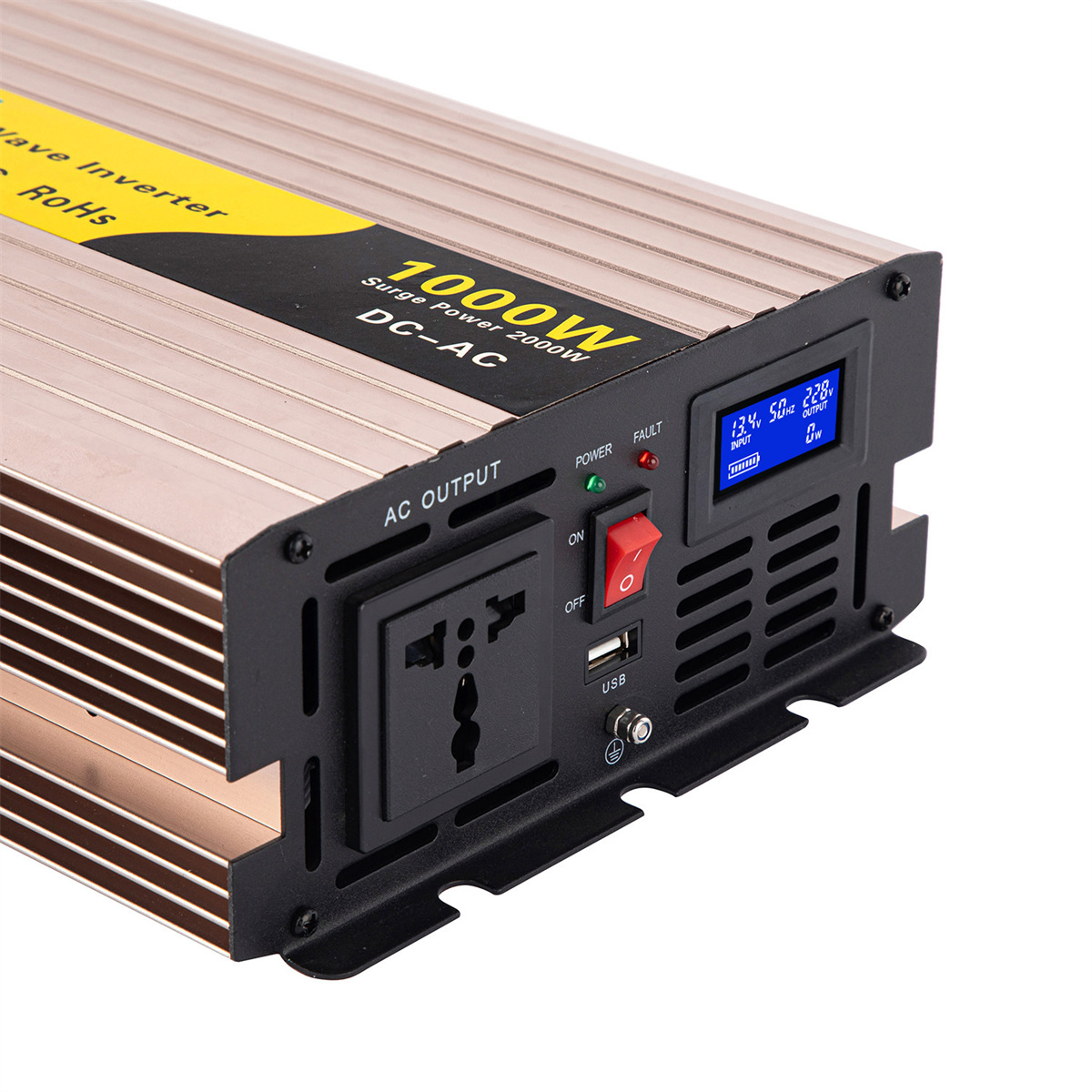
Why does my car inverter beep?
On REP series inverters there are two warnings that come before a shutdown: low input voltage and high temperature. The alarm is an early warning. If the voltage keeps falling, or the temperature keeps rising, the inverter turns its red LED on and shuts down. Overload, over-voltage and short circuit protection do not give a long warning; the inverter switches off and shows the red LED.
So a beep with the red light still off usually means low battery voltage or high temperature. Reduce the load, start the engine, or improve airflow before the output cuts off.
What voltage does an inverter shut off at?
Every inverter has its own thresholds. These are the published values for the Rogerele REP pure sine wave series (for example the REP1000 and REP2000):
| Setting | 12V model | 24V model | 48V model |
|---|---|---|---|
| Input voltage range | 10–15.5V | 20–31V | 40–61V |
| Low voltage alarm (beep) | 10.5V ±0.5V | 21V ±0.5V | 42V ±1V |
| Low voltage shutdown | 10V ±0.5V | 20V ±0.5V | 40V |
| Restarts after low voltage at | 12.3V ±0.5V | 24V ±0.5V | 48V ±1V |
| Over voltage shutdown | 15.5V ±0.5V | 31V ±0.5V | 61V ±1V |
| Restarts after over voltage at | 14.8V ±0.5V | 29.5V ±0.5V | 59V ±1V |
Notice the recovery value. After a low-voltage shutdown, a 12V REP inverter waits until the input climbs back to about 12.3V. A tired battery may never get there on its own, which is why starting the engine (so the alternator charges at roughly 13.5–14.5V) often brings the inverter back.
Why does my inverter shut off when the battery still shows 12V?
This is the most common complaint, and the answer is voltage drop. A 1000W load on a 12V inverter pulls roughly 90–100A. Thin or long cables, loose lugs, or a cigarette-lighter plug lose voltage at that current, so the inverter's terminals may see 10.5V or less while the battery itself reads 12.4V.
How to check for voltage drop
- Measure voltage at the battery posts and at the inverter's DC terminals while the load is running.
- If the two readings differ by more than a few tenths of a volt, the cables, fuse holder or connections are too small or too loose.
Keep the DC cables short, use the right gauge for the current, and connect directly to the battery for anything above a few hundred watts. Our guide to car inverter wire size and fuses has the cable tables, and hardwire vs cigarette lighter explains why lighter sockets limit power.
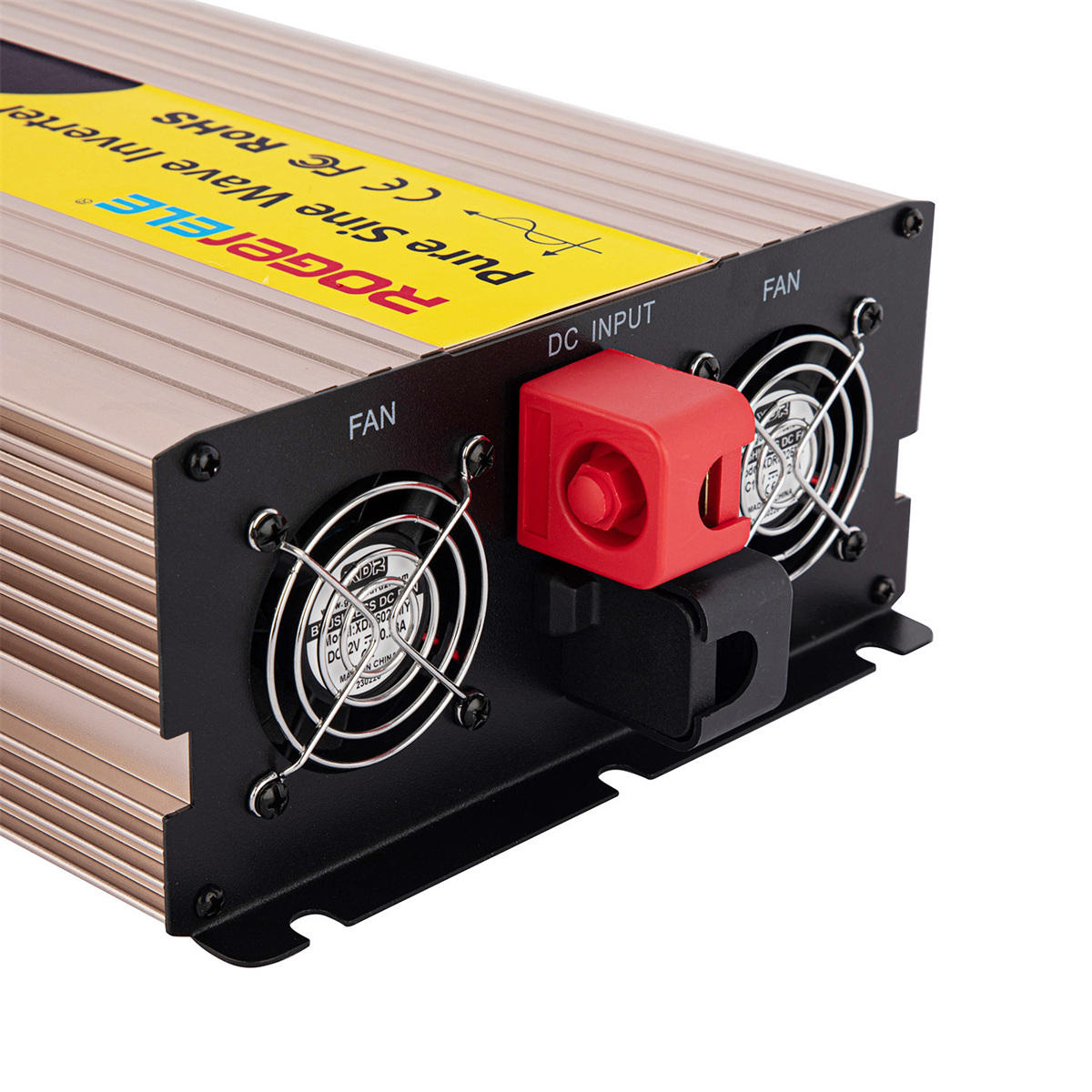
Why does my inverter shut off when I turn on an appliance?
If the inverter cuts out the instant you switch something on, it is usually overload or a voltage dip caused by startup current. Motors and compressors draw much more for a moment than their label shows. REP inverters are rated for a peak power of twice the continuous rating (2000W peak on the REP1000, 4000W on the REP2000), but that surge only works if the battery and cables can deliver the current.
Fridges, microwaves, coffee makers and power tools are typical problem loads. Add up everything running together and leave headroom. Our articles on sizing an inverter for a microwave and what a 2000W pure sine inverter can run give real examples.
Can an inverter overheat in a car?
Yes. REP inverters use intelligent air cooling with built-in fans, and the published working temperature range is -10°C to +50°C. A closed trunk, the space under a seat, or a dashboard in summer sun can easily pass that. The inverter beeps first, then shuts down if it keeps getting hotter.
- Leave several centimeters of open space around the fan and vent ends.
- Do not cover the inverter with bags, blankets or gear.
- Mount it out of direct sunlight and away from the exhaust or heater ducts.
What if the inverter will not turn on at all?
Check the main fuse, the cable connections and the battery voltage first. On REP inverters, connecting the battery backwards is handled by an internal fuse that burns out to protect the circuit. If the cables were ever reversed, the fuse is the first thing to inspect. A dead unit can also be a battery that has dropped below the recovery voltage, so charge the battery and try again.
Over-voltage is less common but happens with a faulty alternator regulator, a charger set too high, or a 12V inverter connected to a 24V truck system. A 12V REP model shuts down above about 15.5V, so always match the inverter to your vehicle: 12V for most cars and pickups, 24V for many heavy trucks. See 12V vs 24V inverter sizing if you are not sure.
How do I stop my inverter from shutting off?
- Run the engine for heavy loads so the alternator supports the battery.
- Upgrade the cables and connect directly to the battery with a proper fuse.
- Test or replace a weak battery, or add a dedicated one. Read do I need an auxiliary battery.
- Reduce or stagger loads so startup surges do not overlap.
- Give it airflow and keep it out of the sun.
- Use the right size and voltage of inverter for your loads and vehicle system.
If you use the inverter with the engine off, the low-voltage alarm is also your reminder to protect the starting battery. Our article will a car power inverter drain my battery explains safe limits.
FAQ
Is it normal for an inverter to beep when I start the car?
Yes, it can be. Cranking the engine pulls the battery voltage down for a moment, which can trigger the low-voltage alarm. It is best to switch the inverter off before starting the engine and turn it on afterwards.
Why does my inverter work with the engine running but not with it off?
With the engine running, the alternator holds the voltage up. With it off, the battery voltage sags under load until it reaches the low-voltage alarm and shutdown points. That points to a battery that is too small or partly discharged, or to cables that are too thin.
Does a red LED mean my inverter is broken?
Not usually. On REP inverters the red LED shows that a protection has tripped: low voltage, over voltage, overload, over temperature or short circuit. Remove the cause, and the inverter can work again.
Can a pure sine wave inverter stop shutdowns with sensitive devices?
A pure sine wave output (REP models are rated below 3% THD on linear loads) runs motors, chargers and electronics more smoothly than a modified sine wave. It will not fix low battery voltage or overload, though. Those still need correct wiring and sizing.
How long will my battery last before the alarm sounds?
It depends on battery capacity and load. Use the formula in how long will a battery run an inverter to estimate runtime before you reach the alarm voltage.
Rogerele (Wenzhou Rogerele Electronic Technology Co., Ltd.) designs and manufactures 12V, 24V and 48V pure sine wave inverters from 300W to 6000W, with custom DC input voltages available. Browse the REP pure sine wave inverter series or contact us for wholesale and OEM orders.
